Should I build my app in React Native or native Android and iOS?
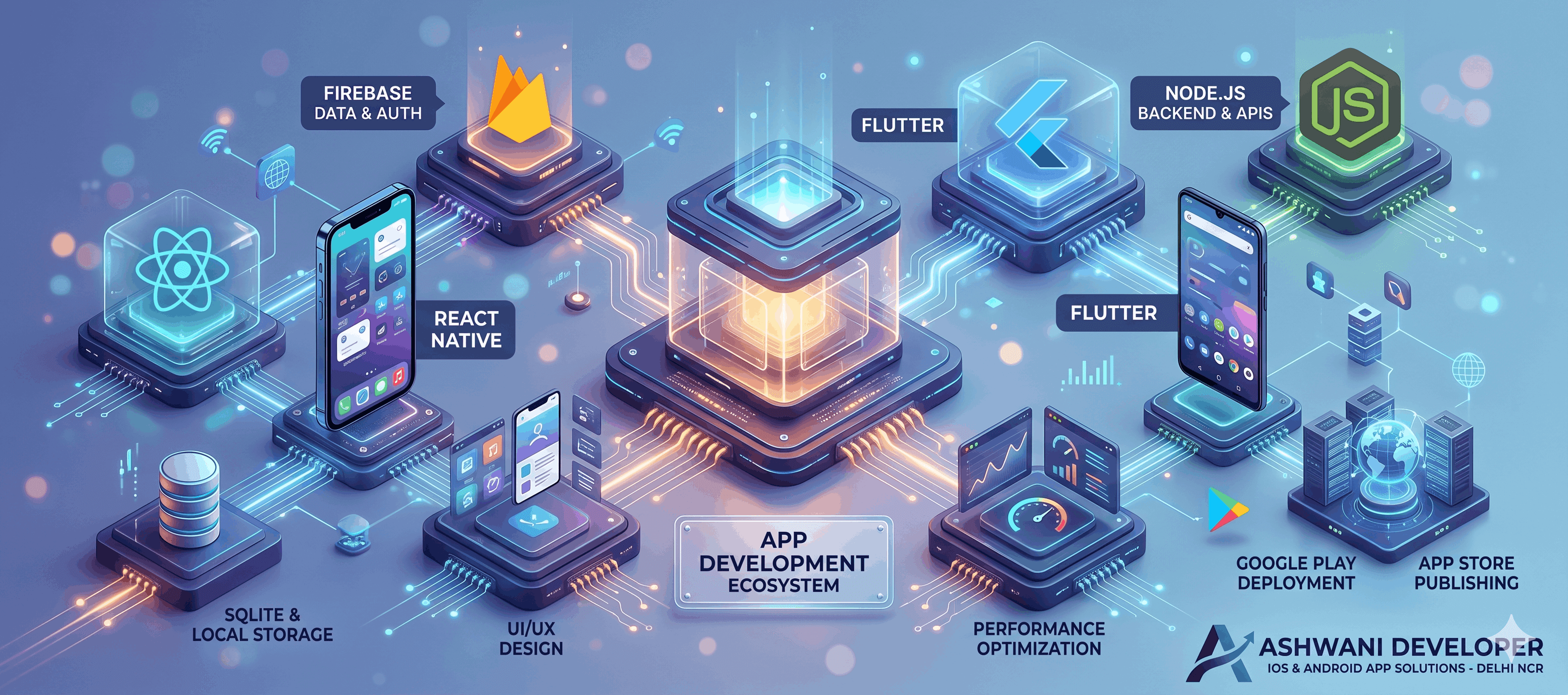
For most business apps React Native is the better choice: one codebase serves both platforms, development is faster, and maintenance is cheaper. Fully native development makes sense for apps that depend on heavy graphics or deep device-level features, and I will tell you honestly if that applies.
How much does mobile app development cost in India?
It depends on the number of screens, backend complexity, integrations such as payments or maps, and whether an admin dashboard is needed. You receive a fixed, milestone-based quote after scoping, and a lean first version can be planned to control cost.
How long does it take to develop and launch an app?
A focused first version typically takes six to ten weeks including backend and store submission. Complex products are delivered in phases so you can launch sooner and grow the app with real user feedback.
Do you publish the app on Google Play and the App Store?
Yes. I prepare release builds, handle signing, write store-compliant listings, and manage the review process on both stores, including resubmissions if a reviewer requests changes.
Will I own the source code?
Yes. You receive the full source code for the app, backend, and admin panel, along with documentation and repository access.
Do you provide support after the app launches?
Yes. Post-launch support covers bug fixes, OS compatibility updates, performance monitoring, and new features, either as needed or on a monthly maintenance plan.