

All portfolio

PeerFlow: WebRTC P2P File Transfer Platform

A zero-login, privacy-first peer-to-peer file transfer engine powered by WebRTC, Next.js, and React Native. Features architecture utilizing multi-channel SCTP striping for high-speed cross-platform data exchange.

Technology & Networking2026Internal Project
PeerFlow WebRTC Peer-to-Peer File Transfer Architecture and Roadmap
1 / 4

Frictionless, Zero-Cloud Data Movement

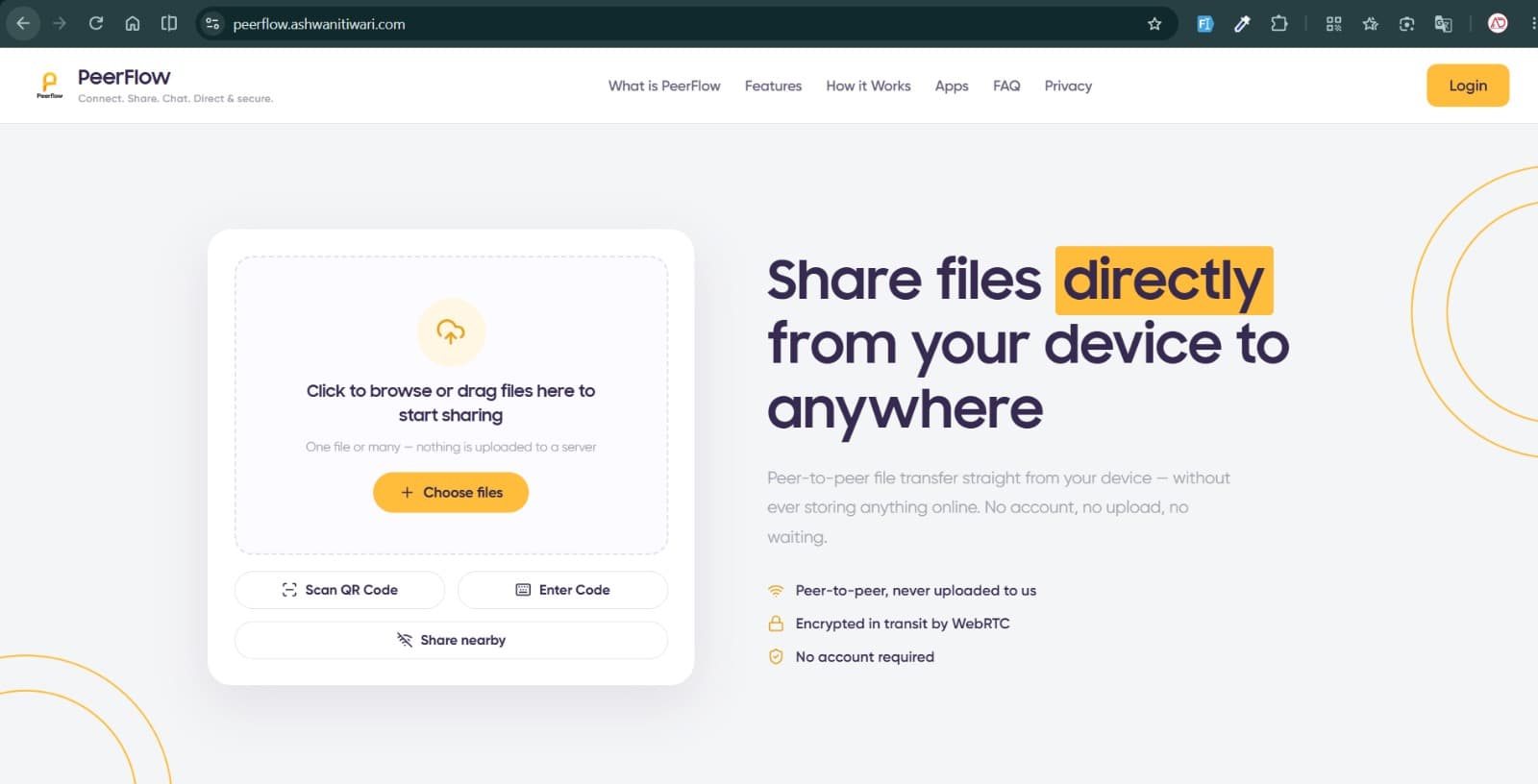
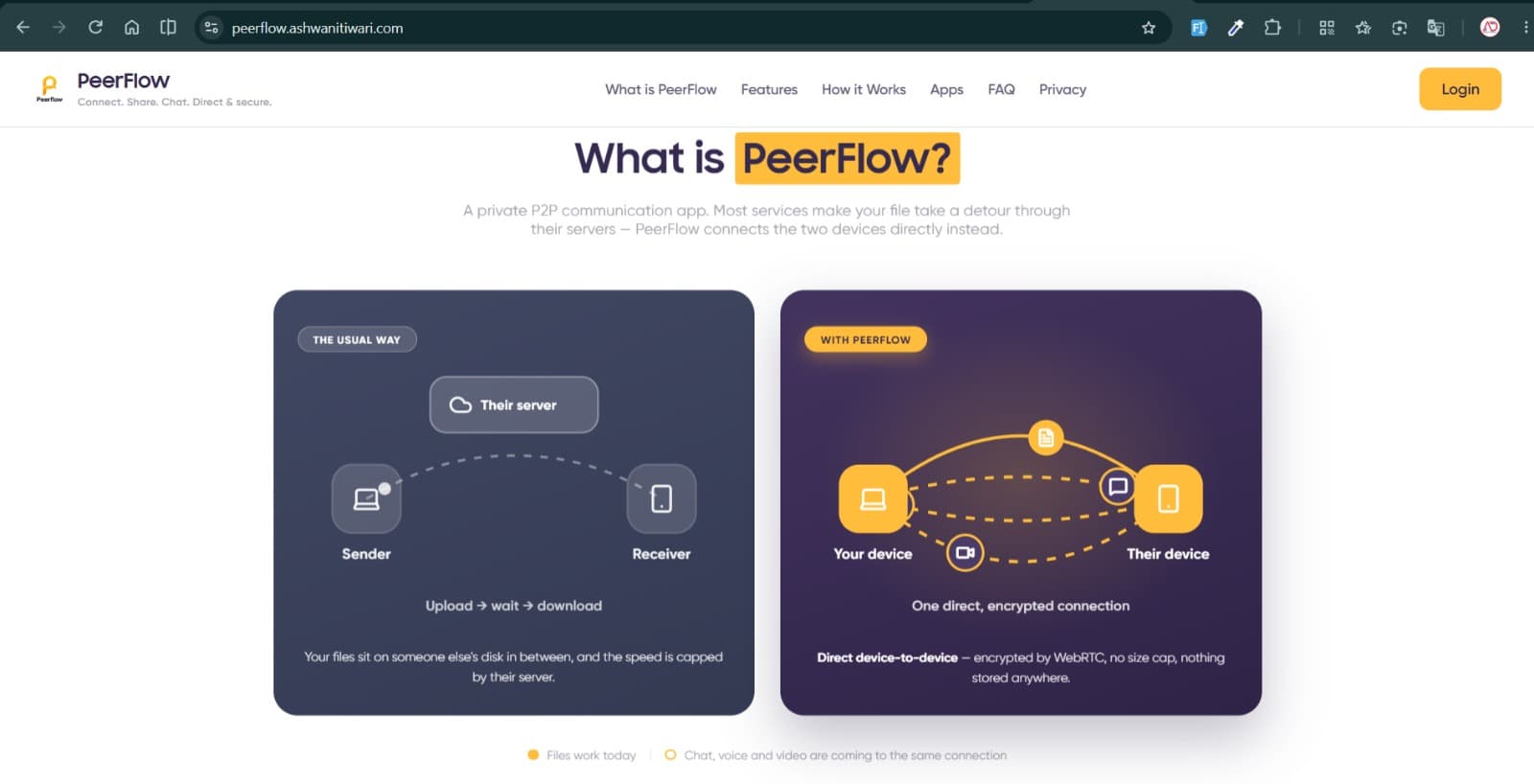
In an era where every file transfer tool requires creating an account, sitting through cloud uploads, and accepting third-party storage terms, PeerFlow offers direct, encrypted, device-to-device communication without any server storing your bytes. Anyone can open the app, pick their files, generate a short 6-character room code or QR code, and begin streaming immediately.

Challenge

Traditional cloud platforms operate on an intermediary relay model introducing severe friction: bandwidth throttling, artificial file size ceilings, storage limits, and persistent privacy risks. Furthermore, WebRTC DataChannels running on SCTP often stall in throughput over high-latency links, creating a bottleneck for cross-border file transfers.

Solution

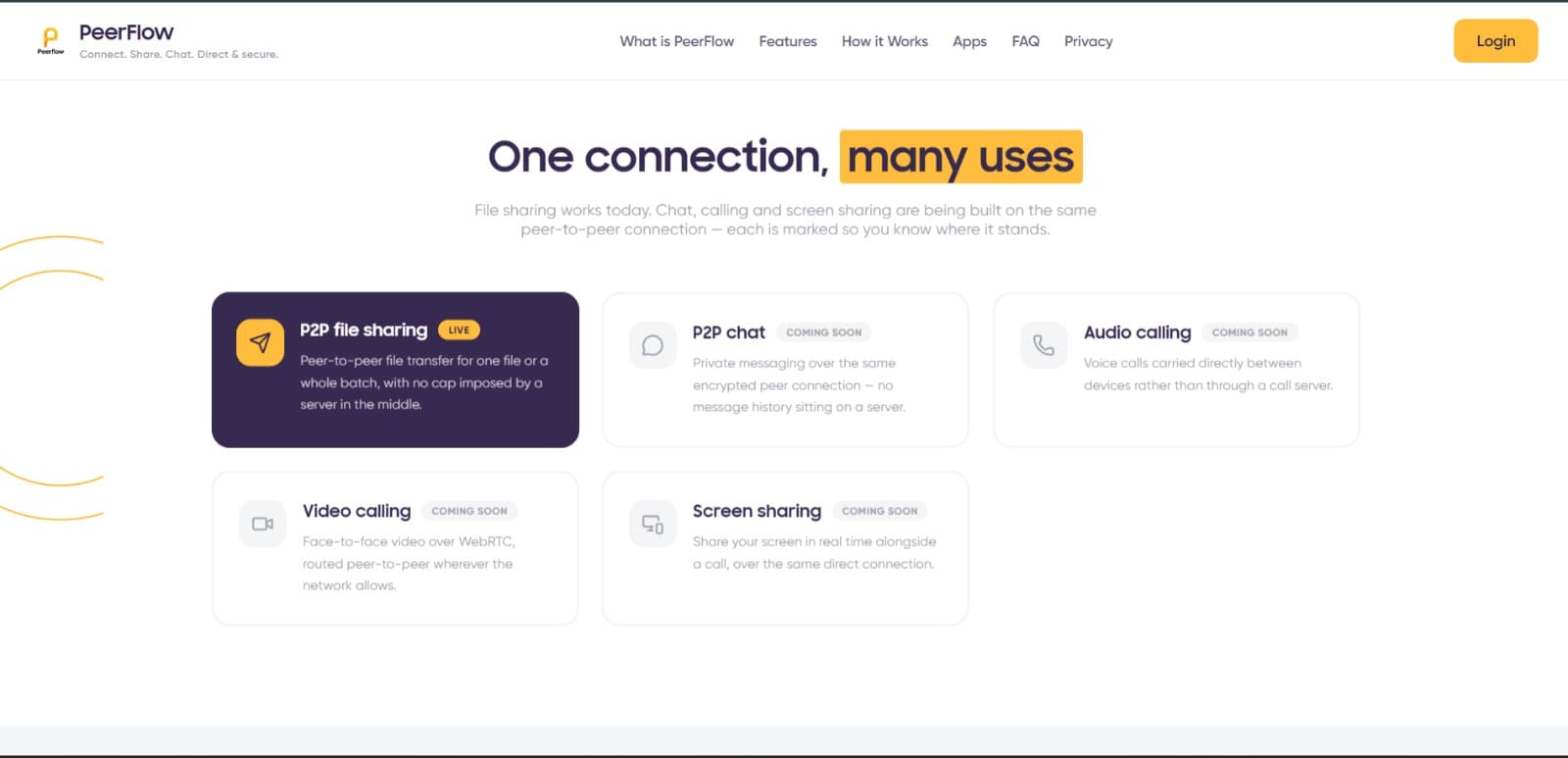
PeerFlow is engineered across three layers: a responsive Next.js web client, a Node.js WebSocket signaling server with a Coturn TURN server for complex NAT topologies, and a native Android app built with React Native. It overcomes SCTP bottlenecks by striping file payloads across multiple parallel DataChannels, scaling dynamically. It implements strict backpressure throttling to avoid memory blowups and applies adaptive on-the-fly compression for raw text or source code files.

Result

PeerFlow successfully streams files directly peer-to-peer with zero data storage on intermediary servers, guaranteeing full cross-platform parity between desktop web, mobile web, and Android devices. It supports offline mode LAN discovery and is actively finalizing its pipeline for an upcoming Google Play Store release.