API Integration for Business: Payments, WhatsApp, CRM, and Accounting Explained
How API integration connects your website, CRM, payment gateway, WhatsApp, and accounting tools so work stops being copied by hand, plus what to check before you build.
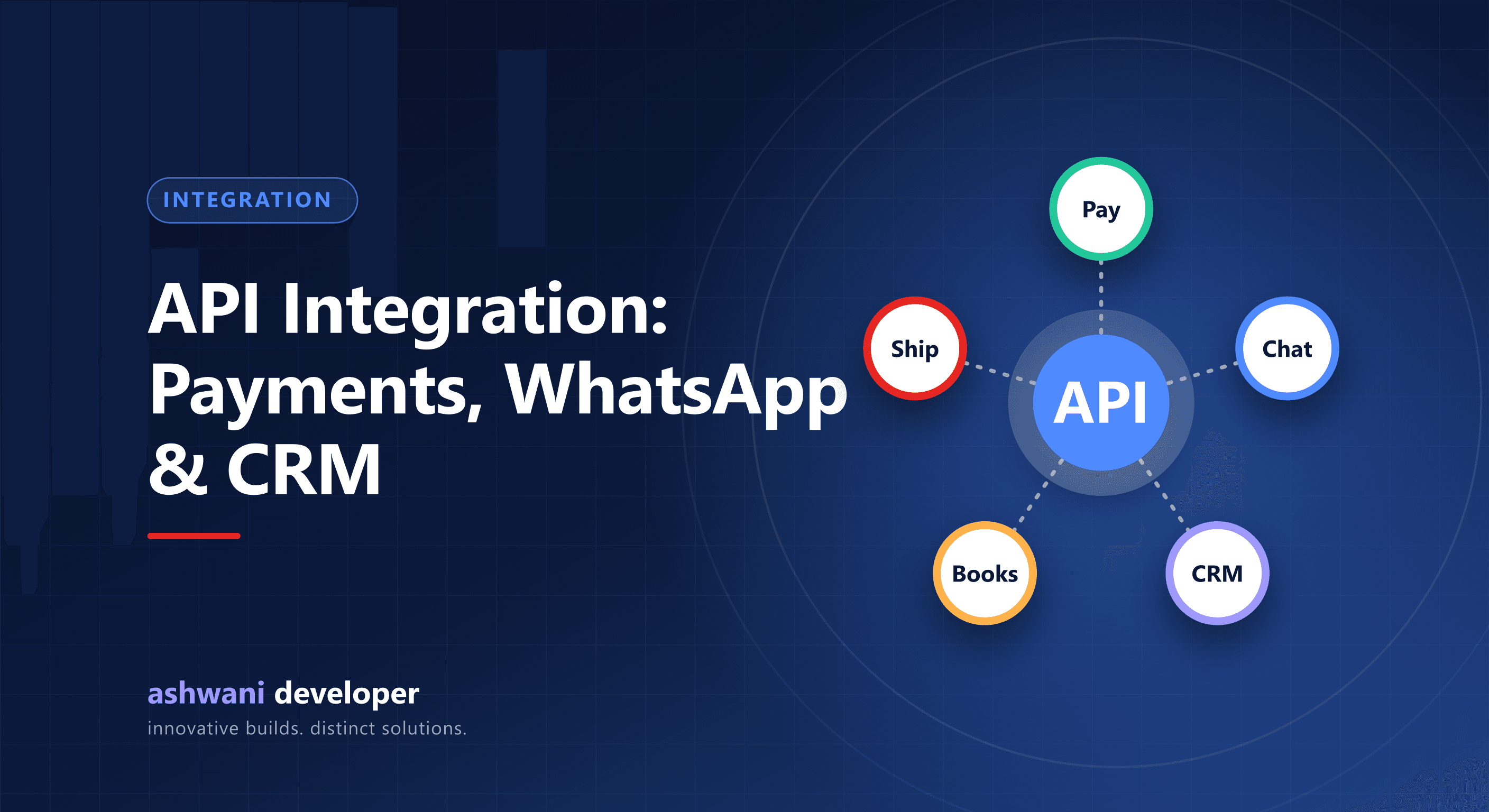
Every time someone on your team copies data from one tool into another, you are paying for an integration that has not been built yet. API integration removes that manual step by letting your systems talk to each other automatically, which saves time, cuts errors, and makes your data trustworthy.
What an API actually is
An API (application programming interface) is a defined way for one piece of software to ask another for something, or to send it something. When your website sends a new enquiry into your CRM, or your store confirms a payment with a gateway, it is using an API.
Two ways systems exchange data
- Requests: your system asks another for data on demand, such as "give me this order's status".
- Webhooks: the other system tells you when something happens, such as "payment succeeded". Webhooks are how payments and messages stay reliably in sync.
Common integrations that pay for themselves
Payment gateways
Connect checkout to UPI, cards, and net banking through a gateway, and use webhooks so that an order is marked paid even if the customer closes the browser. Never trust the browser alone to confirm a payment.
WhatsApp and messaging
Send order updates, appointment reminders, and lead acknowledgements automatically through the official WhatsApp Business API or a provider. Messages triggered from your CRM keep history in one place.
CRM and website forms
Push every form submission and chat enquiry into your CRM with source, page, and campaign details, then assign it automatically.
Accounting and invoicing
Create invoices, record payments, and sync customers with accounting software so finance does not retype orders.
Shipping and logistics
Check serviceability by pincode, create shipments, and fetch tracking updates for online stores. This is a core part of e-commerce development in India.
What good integration work looks like
- Secure credentials: API keys kept on the server, never in the browser or public code.
- Retries and error handling: failed calls are retried and logged instead of silently lost.
- Idempotency: a repeated webhook does not create duplicate orders.
- Monitoring: someone is alerted when an integration breaks.
- Documentation: you know what connects to what.
Questions to ask before you build
- Does the third-party service have a stable, documented API and sensible limits or fees?
- Which system is the single source of truth for each type of data?
- What should happen when the other service is down?
- Who will maintain the integration when the provider changes its API?
Get systems talking
If your team spends hours moving data between tools, start with the one repeated task that costs the most time. Learn more about API integration services or list the tools you use and get a plan for connecting them.