E-Commerce Website Development in India: Shopify vs Custom Build
Should you launch on Shopify or build a custom e-commerce website? Compare cost, flexibility, payments, SEO, and scaling for Indian online stores.
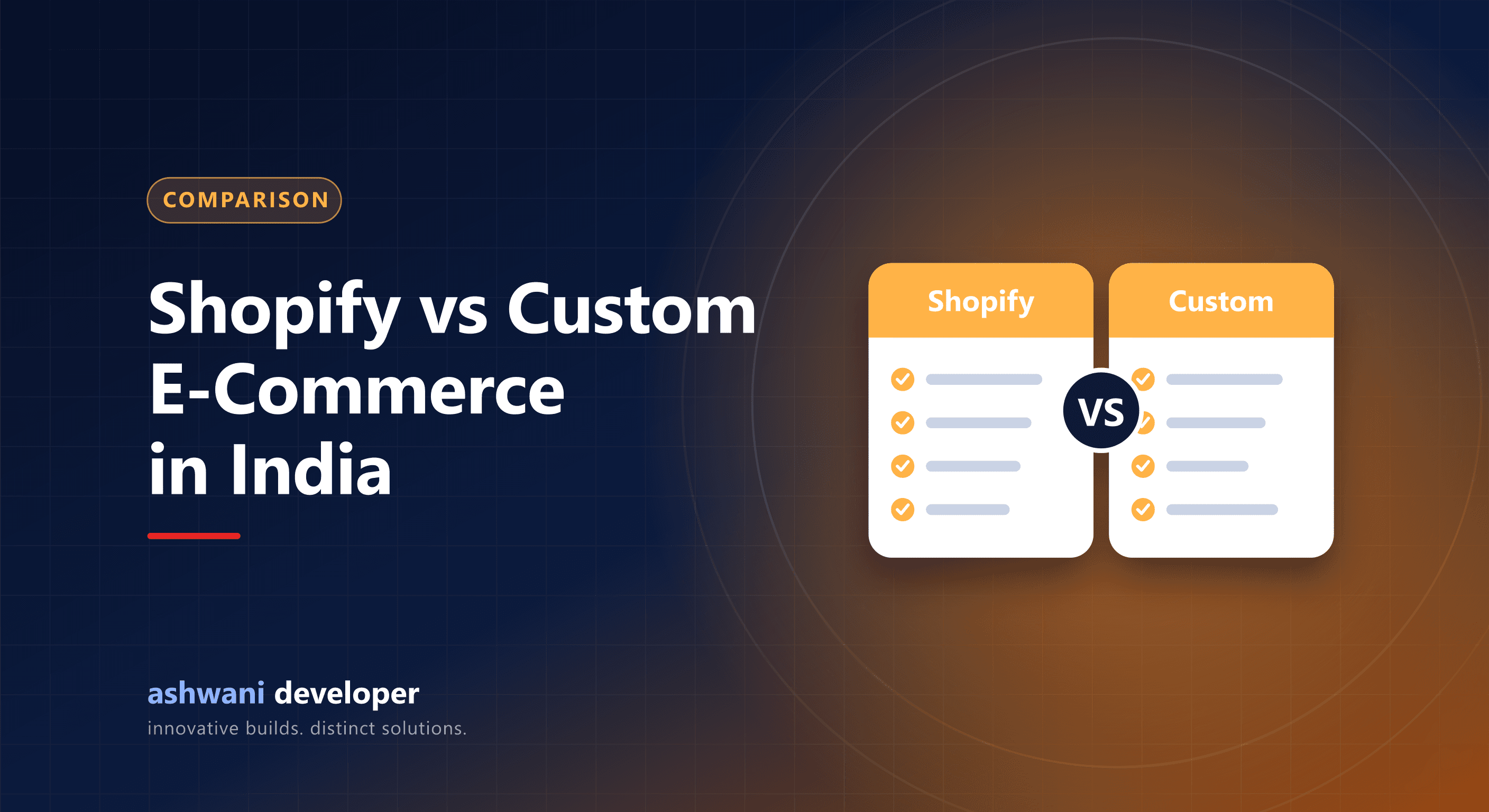
Launching an online store in India involves one early decision that shapes everything after: use a hosted platform like Shopify, or build a custom e-commerce website. Neither is universally better. The right answer depends on your catalogue, your growth plans, and how unusual your business processes are.
Option 1: Shopify and hosted platforms
Strengths
- Fast to launch, often in days or weeks.
- Hosting, security, checkout, and updates are handled for you.
- Large app store for reviews, upsells, and shipping tools.
- Good fit for standard product catalogues and brands testing demand.
Limitations
- Monthly subscription plus app fees that grow over time.
- Transaction fees on some plans or gateways.
- Checkout and data structure constrained by the platform.
- Unusual business rules often need workarounds or paid apps.
Option 2: Custom e-commerce build
Strengths
- Full control over design, checkout flow, and data.
- Business rules built in: tiered pricing, B2B quotes, custom delivery logic, subscriptions, or marketplace features.
- Direct integration with your CRM, inventory, ERP, or accounting software.
- No platform lock-in, and no per-app fees for core features.
Limitations
- Higher upfront cost and longer build time.
- You are responsible for hosting, security, and maintenance, or must pay a developer to be.
- Payment, tax, and shipping integrations must be built and tested.
Indian-specific requirements
- Payments: UPI, cards, net banking, and wallets through gateways such as Razorpay or similar providers, with webhook handling so orders reconcile correctly.
- GST: correct tax calculation, GSTIN on invoices, and state-wise rules.
- Shipping: integration with courier aggregators, pincode serviceability, and cash-on-delivery handling.
- Mobile-first: most Indian shoppers browse and buy on phones, often on mid-range devices and mobile data, so speed is critical.
SEO for online stores
Product and category pages need unique titles and descriptions, clean URLs, fast loading, product structured data, and a sitemap that reflects the live catalogue. Speed has a direct effect on conversion. The same principles appear in our technical SEO checklist, and a performance-focused approach is explained in Core Web Vitals for e-commerce.
How to decide
Choose a hosted platform if you sell a standard product range, want to validate demand quickly, and do not need unusual logic. Choose a custom build if your pricing, fulfilment, or customer model does not fit templates, if you need deep integration with internal systems, or if platform fees would become significant at your expected volume. A hybrid is also common: start on a hosted platform, then migrate or build a custom layer when limits appear.
Plan the whole system, not only the storefront
A store also needs inventory handling, order management, customer communication, and reporting. Connecting these through APIs and a CRM saves hours of manual work; see API integration and CRM development. For a complete scope, read about the e-commerce solutions service or share your catalogue and process to get a clear recommendation and quote.