Core Web Vitals for E-Commerce: Engineering Faster Buying Journeys
How frontend architecture, image delivery, JavaScript discipline, and server performance work together to create faster e-commerce experiences.
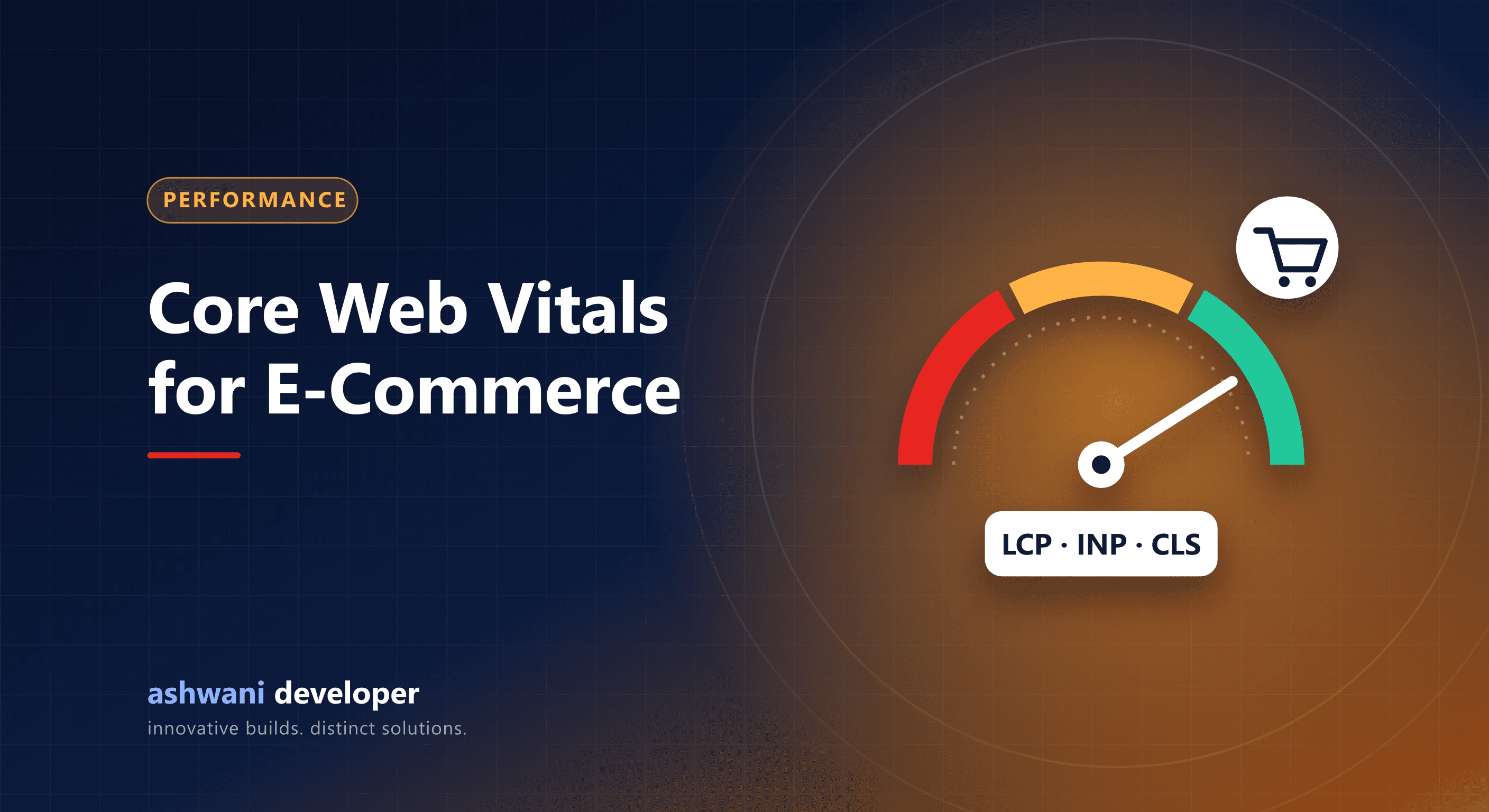
E-commerce performance is a complete system concern. A responsive interface can still feel slow when product media is oversized, third-party scripts block interaction, or backend responses delay the first meaningful render.
Start with the critical buying path
Performance work should prioritize category discovery, product detail pages, search, cart updates, and checkout. These routes carry the highest commercial intent and should receive the strictest budgets for JavaScript, images, fonts, and network requests.
Treat images as application data
Product media needs predictable dimensions, responsive variants, modern formats, and lazy loading outside the initial viewport. Stable image containers also prevent layout movement while assets are loading.
Reduce main-thread competition
Analytics, chat, personalization, and marketing tools can compete with the storefront for browser resources. Load each integration according to business priority, defer nonessential scripts, and regularly remove tags that no longer produce measurable value.
Measure real customer sessions
Laboratory audits are useful during development, but production monitoring shows how performance changes across devices, networks, regions, and catalog sizes. The engineering loop should connect field data to specific releases so regressions can be corrected quickly.