Redis Caching for Web Apps: Make Your API Faster
How caching with Redis speeds up web apps and APIs: what to cache, cache-aside pattern, expiry and invalidation, sessions, rate limiting, queues, and pitfalls to avoid.
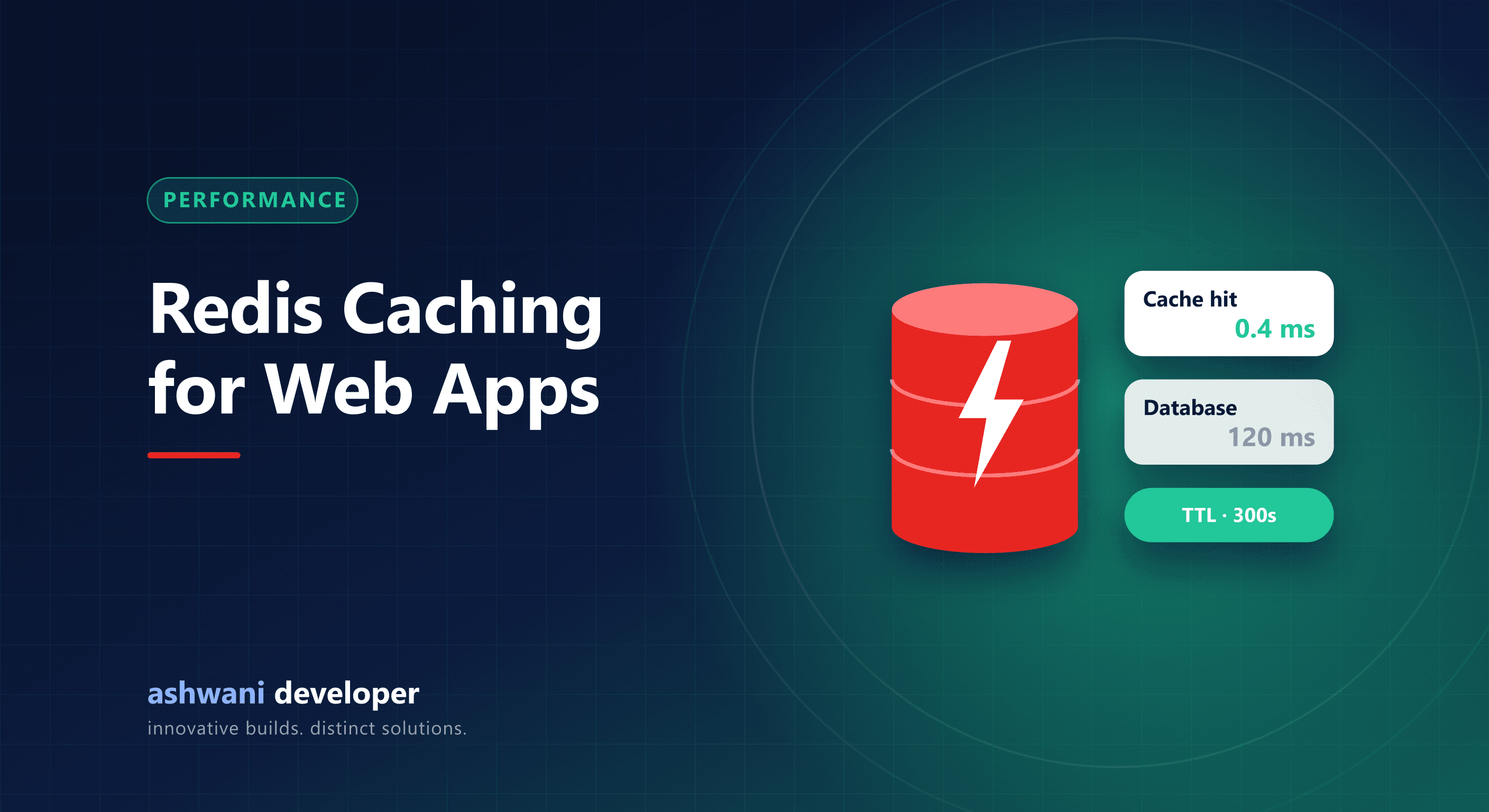
Quick answer: Redis is an in-memory data store that can return cached data in well under a millisecond. Cache expensive, frequently read, rarely changing data (such as product lists, settings, and computed reports) with sensible expiry times, and invalidate the cache when the underlying data changes.
Why cache?
Most slow APIs repeat the same expensive work: complex database queries, calls to third-party APIs, or heavy calculations. Caching stores the result once and serves it many times, reducing response times and database load.
What to cache
- Public lists such as products, categories, and blog posts.
- Configuration and settings read on every request.
- Results of expensive reports and aggregations.
- Responses from slow third-party APIs, within their terms.
Avoid caching highly personalised or rapidly changing data unless keys are scoped per user and expiry is short.
The cache-aside pattern
- Check Redis for the key.
- If found, return it.
- If not, read from the database, store the result in Redis with an expiry, and return it.
- When the data changes, delete or update the cached key.
Expiry and invalidation
- Always set a time-to-live so stale data eventually disappears.
- Invalidate on writes: when a product is updated, delete its cache keys.
- Use clear key naming, such as
product:123orblog:list:page:1. - Prevent stampedes on popular keys with locks or slightly randomised expiry.
Other uses of Redis
- Sessions shared across multiple app servers.
- Rate limiting login and OTP endpoints.
- Queues for background jobs such as emails and report generation.
- Real-time features through pub/sub, such as notifications and live tracking.
- Leaderboards and counters.
Pitfalls
- Treating Redis as the only copy of important data without persistence configured.
- Caching errors or empty results for too long.
- Unbounded memory growth; set memory limits and eviction policies.
- Exposing Redis to the internet without authentication; keep it on a private network.
Before adding a cache
Check database indexes and query design first. A missing index is often the real problem, and caching only hides it. Also consider framework-level caching; Next.js can cache rendered pages and fetch results, which this site uses for its blog.
Related: how to improve website speed, MongoDB vs MySQL. Need a faster backend? Get in touch.