Why Custom CRM Platforms Outperform Off-the-Shelf SaaS
A practical comparison of custom CRM architecture and subscription platforms for businesses with complex workflows, integrations, and reporting needs.
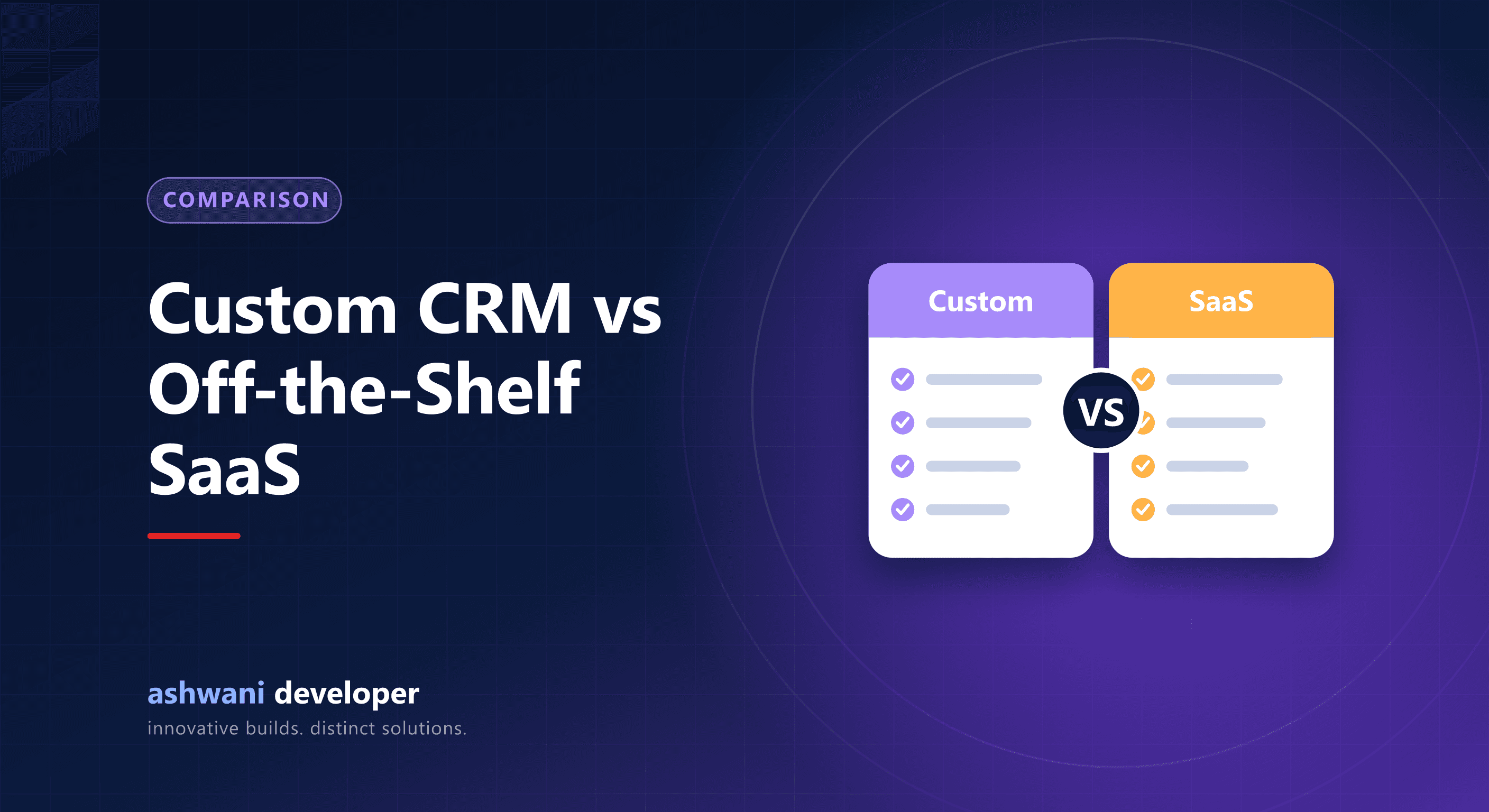
Standard CRM products are useful when a business can adapt to a fixed workflow. The limitations appear when teams need custom approval paths, role-based dashboards, specialized reporting, or integrations that do not fit a vendor's predefined model.
Software should follow the operation
A custom CRM starts with the way the business already qualifies leads, assigns work, manages follow-ups, and measures performance. The data model and interface are then engineered around those responsibilities instead of forcing every department into the same generic pipeline.
Ownership changes the economics
Subscription platforms often become more expensive as users, automation rules, storage, and reporting requirements grow. A custom platform requires deliberate initial engineering, but the organization controls its roadmap, integrations, and infrastructure without waiting for a third-party product tier.
Integration becomes part of the architecture
Payment systems, marketing tools, support channels, inventory services, and internal APIs can be connected as first-class workflows. This removes repeated exports and reduces the manual handoffs that create inconsistent records.
When a custom CRM is the right decision
The strongest use cases are businesses with established processes, multiple departments, domain-specific compliance, or reporting requirements that cannot be represented cleanly in a standard SaaS product. The goal is not customization for its own sake; it is a maintainable system that reflects how the company actually operates.