Static vs Dynamic Website: Differences, Examples, and Which One You Need
What is the difference between a static and a dynamic website? Clear definitions, examples, pros and cons, and a simple way to decide which fits your business.
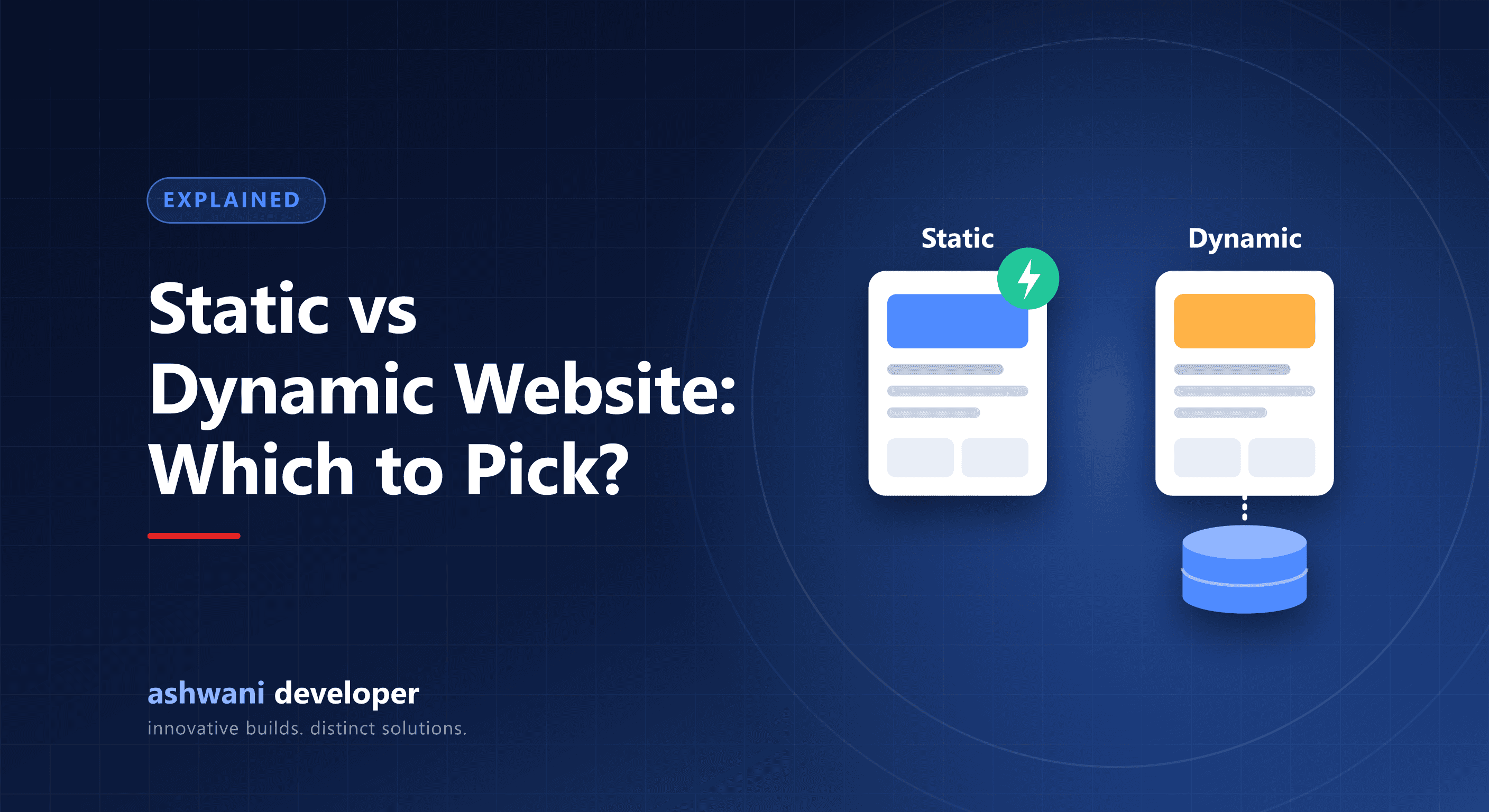
Quick answer: a static website serves the same pre-built pages to every visitor, which makes it very fast, cheap to host, and secure. A dynamic website builds pages on request from a database, so it can show personalised or frequently changing content such as accounts, carts, and dashboards. Many modern sites mix both.
What is a static website?
A static website is a set of ready-made HTML pages. When someone visits, the server simply sends the file that already exists. Nothing is calculated per visitor. Typical examples are portfolio sites, small business brochures, documentation, and event pages.
What is a dynamic website?
A dynamic website generates pages when they are requested, using a server and usually a database. The same URL can show different content to different people. Examples include online stores, booking systems, social platforms, customer portals, and any site with logins.
Side-by-side comparison
| Factor | Static | Dynamic |
|---|---|---|
| Speed | Very fast; pages are pre-built | Depends on server, database, and caching |
| Hosting cost | Low; can be served from a CDN | Higher; needs a running server and database |
| Security | Small attack surface | More moving parts to secure |
| Personalisation | Limited | Full: accounts, carts, dashboards |
| Content updates | Rebuild needed, unless paired with a CMS | Instant through an admin panel |
| Best for | Brochures, portfolios, docs, landing pages | Stores, portals, CRMs, booking, SaaS |
The modern answer: hybrid rendering
The old choice between static and dynamic has mostly disappeared. Frameworks like Next.js let each page choose how it is rendered:
- Static generation for pages that rarely change, such as service pages.
- Incremental regeneration for pages that change occasionally, such as blog posts, which are rebuilt in the background after an update.
- Server rendering for pages that must be fresh on every request, such as dashboards.
This website works that way: blog posts are managed in an admin panel and stored in a database, yet visitors receive fast, pre-rendered pages that are refreshed automatically after edits. You get static speed with dynamic editing.
SEO: does static rank better?
Google ranks pages, not architectures. Static pages help because they are fast and fully rendered in HTML, which search engines read easily. A dynamic site can match that when it renders on the server and uses caching. What hurts SEO is content that only appears after heavy client-side JavaScript, slow servers, or duplicate URLs. Our technical SEO checklist covers the details.
How to decide
- Choose static (or mostly static) if your content changes a few times a month and visitors do not log in.
- Choose dynamic if users sign in, buy, book, or see data specific to them.
- Choose hybrid if you want fast marketing pages plus a blog, admin panel, or customer area. For most growing businesses this is the right answer.
Cost and time
Static sites are quicker and cheaper to build and host. Dynamic features add development time for the database, admin tools, and security. See what affects website cost in India and how long a website takes.
Not sure which you need? Describe what visitors should be able to do and get a recommendation, or read more on the website development service page.