Website Development Cost in India: What Actually Affects the Price
Why website quotes in India vary so much: the real cost drivers, what is usually included, hidden costs to plan for, and how to compare quotes fairly.
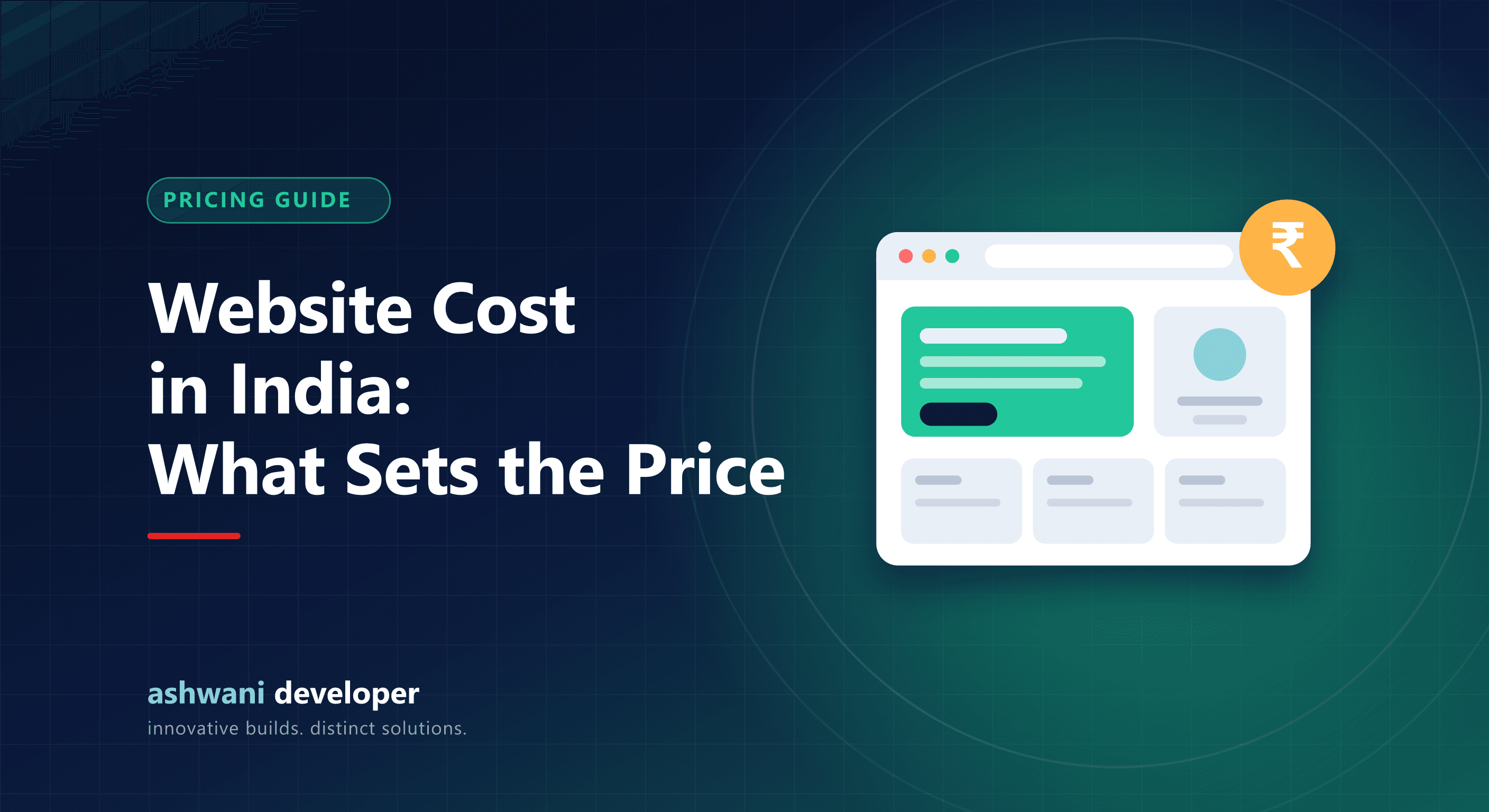
Ask three developers for a quote on the same website and you may receive three very different numbers. That is not always dishonesty. It usually means each developer has quietly assumed a different scope. Understanding what actually drives website development cost in India lets you compare quotes sensibly and avoid paying for things you do not need.
The main factors that set the price
1. Number and type of pages
A five-page brochure site and a 60-page site with service, location, and blog sections are different projects. Each unique page layout needs design and development time, while repeating templates, such as blog posts or service pages managed from a CMS, scale much more cheaply.
2. Custom design versus a template
A customised template is faster and cheaper. A fully custom design built around your brand and customers takes longer but can convert better and look distinctive. Neither is wrong; they suit different budgets and goals.
3. Functionality
Static content is the cheapest part of any site. Cost rises with booking systems, payment gateways, user accounts, dashboards, search and filters, multi-language support, and third-party integrations. A site that needs a backend and database is a web application, and it is priced like one.
4. Content management
If you want to edit pages, blogs, and services yourself without a developer, an admin panel is needed. It adds build time but saves ongoing maintenance cost.
5. Technical SEO and performance
Proper metadata, structured data, sitemaps, image optimisation, and fast loading on mobile take deliberate work. Cheap quotes often leave these out, which is exactly why some sites never get found. See our technical SEO checklist for what should be included.
6. Content and imagery
Who writes the text and supplies the photos? Original copywriting, photography, and graphics are separate costs from development.
7. Who is building it
A freelance developer working directly with you carries lower overheads than an agency with account managers and office costs. The best value is often a skilled full-stack freelancer, provided you verify their work using our freelance developer hiring checklist.
Costs people forget to budget
- Domain and hosting: recurring yearly or monthly fees.
- Paid tools: email service, form handling, analytics, or premium plugins.
- Security and backups: monitoring and regular backups.
- Maintenance: updates, bug fixes, and small content changes after launch.
- Marketing: a website does not bring visitors on its own; content and promotion take time and effort.
How to compare quotes fairly
- Ask each developer to list pages, features, and integrations included.
- Check whether SEO setup, hosting, deployment, and support are included or extra.
- Confirm revision rounds and what counts as a new request.
- Ask about the technology and whether you can edit content yourself.
- Confirm you will own the code, domain, and accounts.
Cheaper is not always cheaper
A site that loads slowly, cannot be updated, or is built so that Google cannot index it will cost far more in lost enquiries than the amount saved. Conversely, you do not need enterprise features for a service business. The right price is the one that matches a clearly defined scope.
Get a quote based on your real scope
Because pricing depends on the factors above, the most accurate step is a short discovery conversation. Share your pages, features, and goals through the contact page and you will receive an itemised fixed quote. You can also read about the website development service to see what is included in a typical project.