AI Automation for Small Businesses in India: 8 Practical Use Cases
Eight practical ways Indian small businesses can use AI automation today: lead handling, support replies, reporting, document processing, and where to start.
AI automation sounds like a big-company project, but the biggest wins for small businesses are usually small and specific: remove one repetitive task, save an hour a day, and make sure no lead is ever forgotten. Here are eight use cases that deliver value without a large budget.
1. Instant lead response and qualification
When an enquiry arrives from your website or WhatsApp, an automated workflow can reply immediately, ask two or three qualifying questions, and create a lead record. Speed of response is one of the strongest factors in whether a lead converts.
2. Automatic lead assignment and follow-up reminders
Rules route each lead to the right salesperson and schedule follow-ups, escalating if nobody acts. This is a natural feature of a custom CRM.
3. First-draft replies for customer support
AI can draft replies to common questions using your own policies and past answers, which a person reviews and sends. This keeps quality high while cutting typing time.
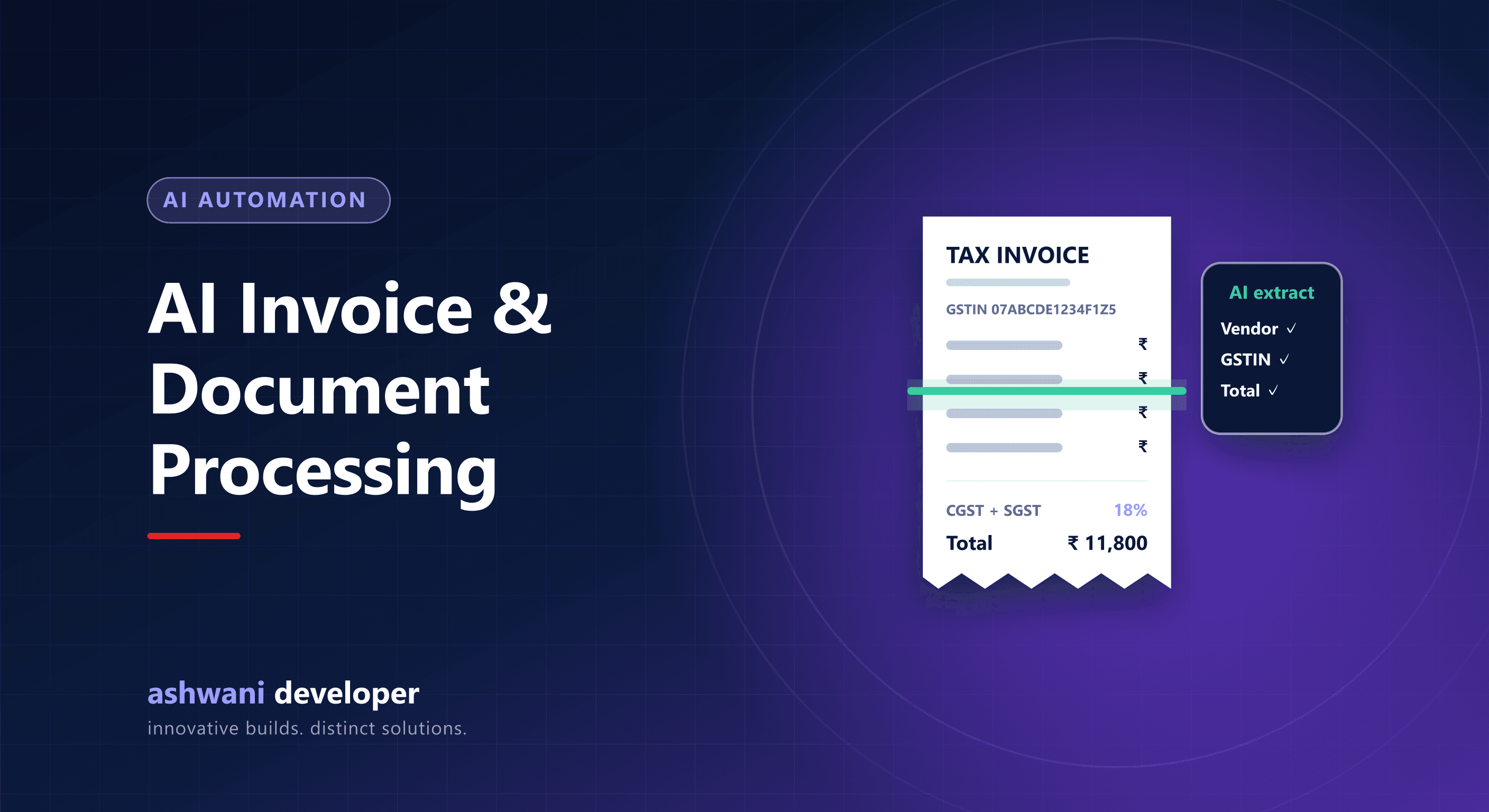
4. Document and invoice data extraction
Reading invoices, forms, or receipts and moving the details into your accounting sheet or software removes hours of manual entry and reduces typing errors.
5. Automated reports
Instead of someone compiling numbers every Monday, a scheduled workflow gathers sales, enquiries, and operations data and sends a summary to management, with unusual changes highlighted.
6. Content and catalogue drafting
Product descriptions, listing text, and social captions can be drafted from structured data, then edited by a person. Always review for accuracy and tone.
7. Appointment and booking handling
Clinics, salons, coaches, and consultants can automate booking, reminders, and rescheduling to reduce no-shows and missed calls.
8. Internal knowledge search
A search assistant trained on your own documents, SOPs, and FAQs helps staff find answers quickly instead of interrupting colleagues.
How to start without wasting money
- Pick one painful task that is repetitive, rule-based, and frequent.
- Measure it: time spent per week and cost of errors.
- Automate a narrow version first and keep a human in the loop.
- Review results after a few weeks and extend only what works.
Risks to manage
- Accuracy: AI can be wrong; keep review steps for anything customer-facing or financial.
- Privacy: avoid sending sensitive customer data to tools without understanding where it is processed.
- Over-automation: do not remove human contact where relationships matter.
Automation works best on top of good systems
Automation needs clean data and clear processes. A CRM or workflow tool that already captures your leads and tasks gives AI something solid to work with. Learn about the AI and automation service, or describe the task that eats most of your team's time and get a practical recommendation.