CRM Development Company in Delhi: How to Choose the Right Partner
A buyer's guide to choosing a CRM development company or developer in Delhi: scope, tech stack, integrations, security, ownership, and questions to ask before signing.
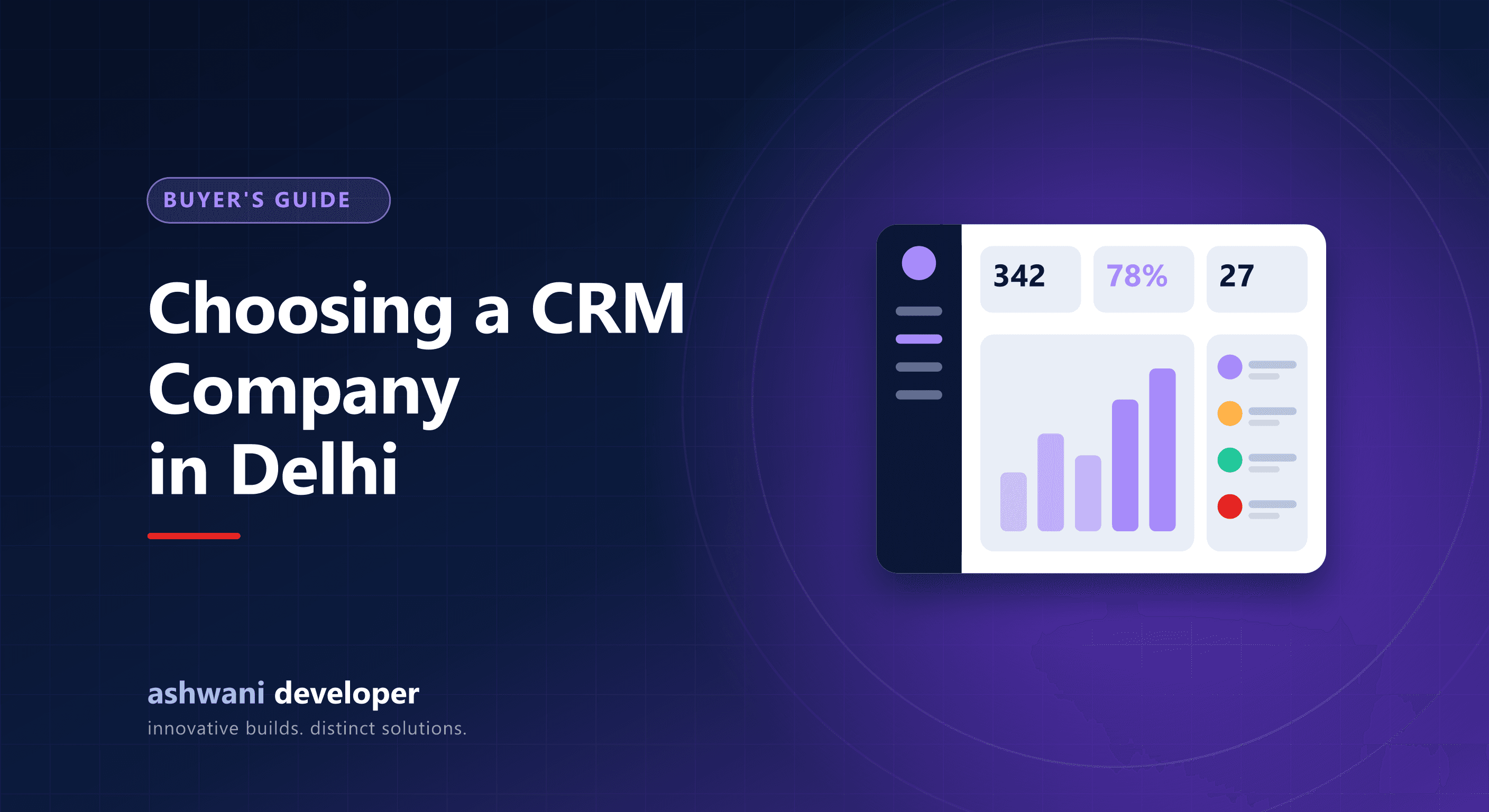
Businesses usually start looking for a CRM development company in Delhi after outgrowing spreadsheets or after a subscription CRM stops fitting how their team actually works. The decision matters because a CRM becomes the backbone of sales, support, and reporting. A poor partner leaves you with software your team avoids. A good partner builds something your team opens first every morning.
Start with the workflow, not the feature list
A strong CRM partner begins by asking how leads arrive, who follows up, what happens at each stage, which approvals are needed, and what reports management reads every week. If the first conversation is a list of features and a price, they are selling a product, not building a solution. Map your workflow first, even roughly on paper, and judge each company by how seriously it studies it.
Custom build, customised SaaS, or off-the-shelf?
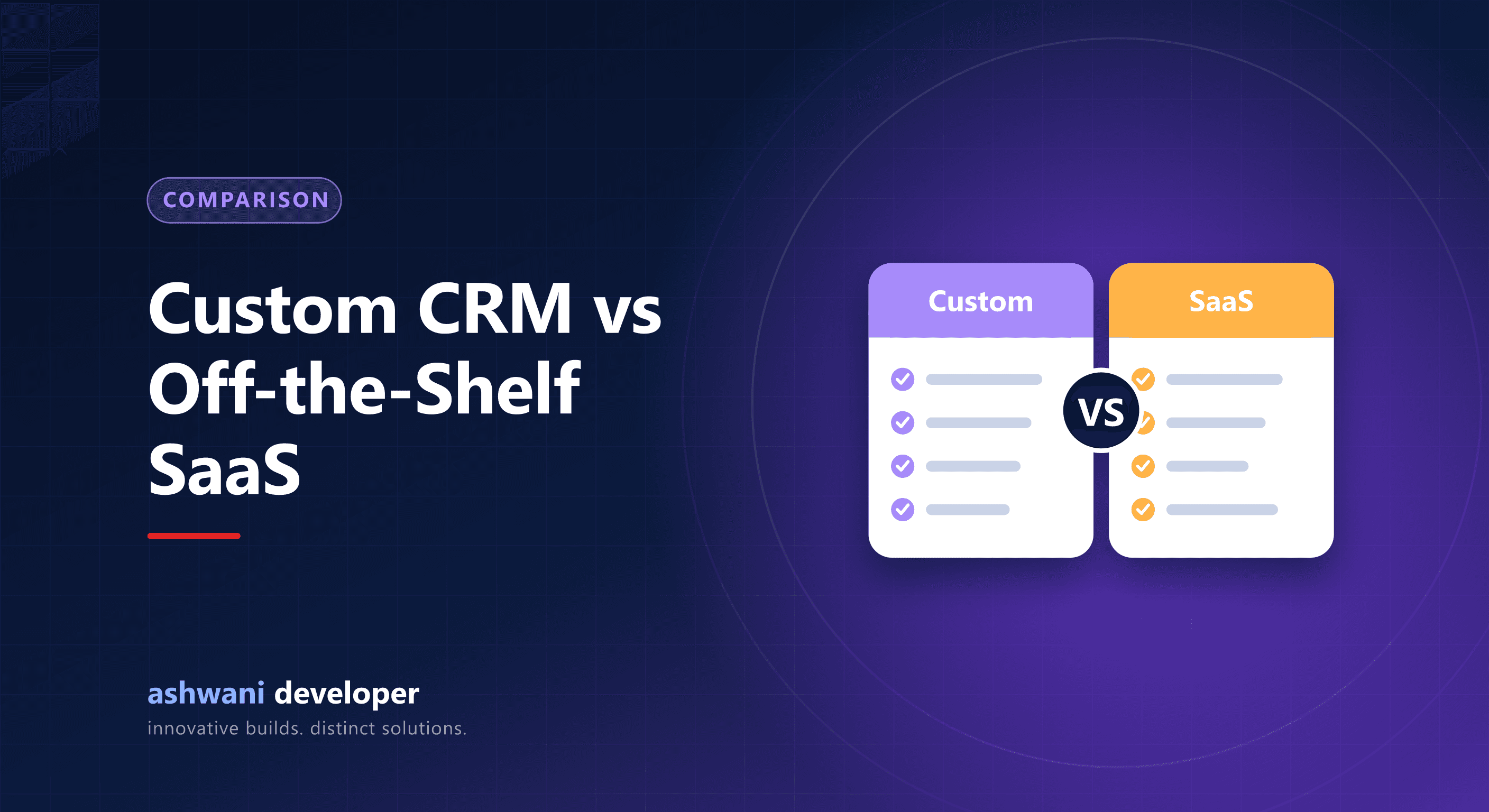
There are three honest options. Off-the-shelf CRMs are quick to start and fine for standard sales pipelines. Customised SaaS adds scripts and plugins on top of a vendor product, which works until you hit the vendor's limits. A custom CRM is engineered around your process and data, which costs more up front but avoids per-user fees and workflow compromises. We compare the trade-offs in custom CRM vs off-the-shelf SaaS.
What a good CRM development company should deliver
- Role-based access: sales, managers, support, and admins each see what they should.
- Lead and pipeline management: capture, assignment, stages, follow-up reminders, and activity history.
- Automation: auto-assignment, notifications, status changes, and scheduled reports.
- Integrations: website forms, WhatsApp or email, payment gateways, accounting, and internal APIs.
- Reporting: dashboards for conversion, team performance, and revenue, not just raw tables.
- Audit trail: who changed what and when.
Questions to ask before you sign
- Can I see a CRM you built and speak to someone who uses it?
- Who owns the source code and the database after delivery?
- How will you handle importing my existing data from Excel or another CRM?
- What does security look like: authentication, permission checks, backups, and logging?
- How is the system deployed, and how are updates released without downtime?
- What support is included after launch, and what does ongoing support cost?
Technology matters less than the team behind it
Modern CRMs are commonly built with React or Next.js on the front end, Node.js APIs, and MongoDB or MySQL for data, deployed through automated pipelines. The stack is rarely the deciding factor. What matters is that the developers have built multi-user, role-based business software before and can show it. For example, Track Time CRM is a real product built on a MERN stack with automated deployment, and the same engineering approach is applied to client projects.
Phase the project to reduce risk
Avoid a single giant build. A sensible plan delivers a working core first, such as lead capture, assignment, and pipeline, then adds reporting, automation, and integrations in later phases. Your team starts using the system early, feedback shapes the later phases, and you can stop or redirect without losing everything already built.
Local advantage in Delhi NCR
For a CRM, meeting your team in person during discovery makes a real difference, because most requirements surface while watching people work. A developer based in Delhi NCR can run workshops with your sales and operations staff in New Delhi, Noida, Gurugram, and nearby cities, then continue remotely.
If you are weighing options, read about the CRM and ERP development service, or send a short brief describing your current process and what is not working. You will receive a clear plan and itemised estimate rather than a generic proposal.