Landing Page vs Website: Which Does Your Small Business Need?
Landing page or full website? Understand the difference, when each one wins, how they work together for ads and SEO, and what to put on each.
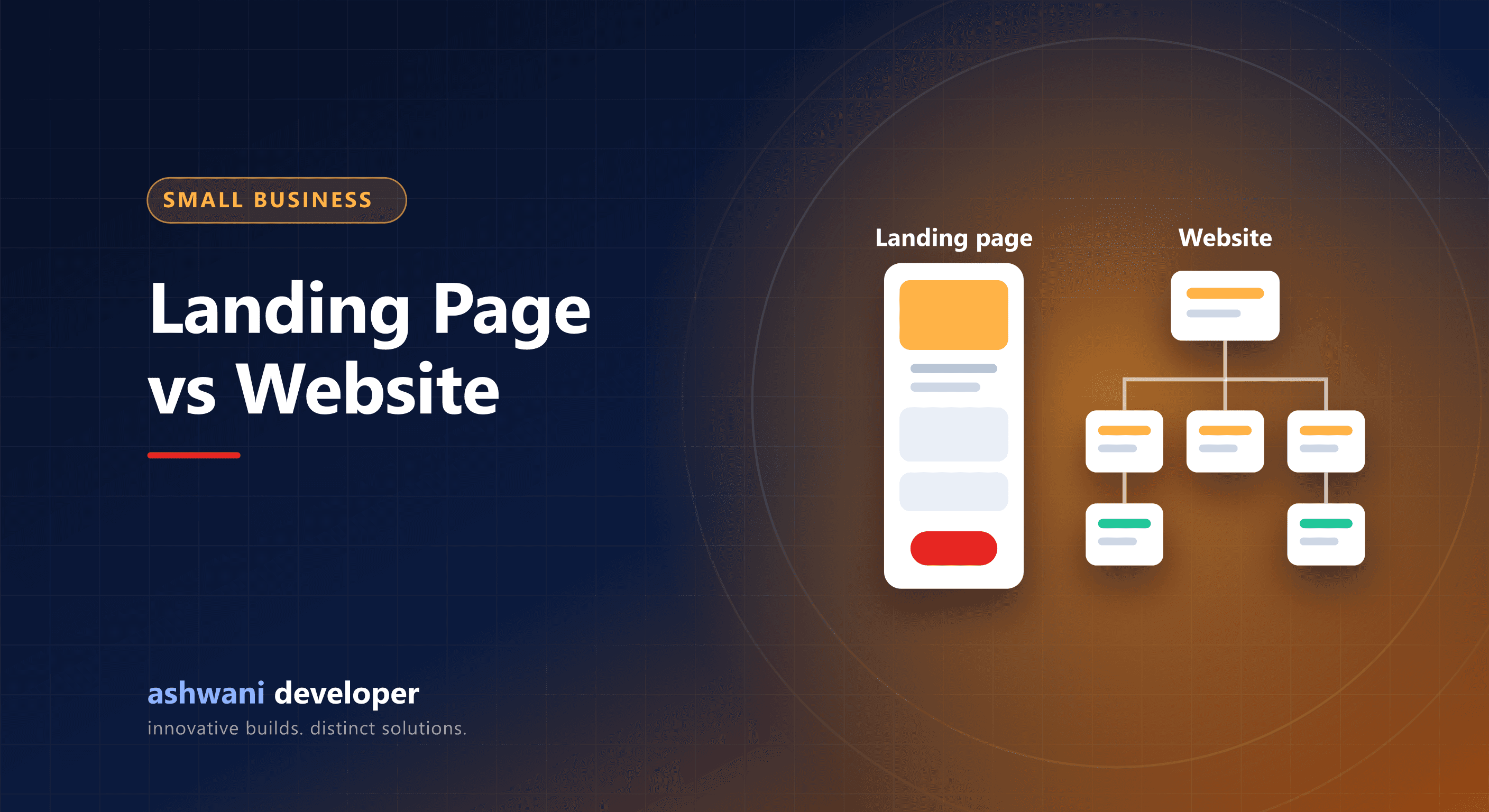
Quick answer: a landing page is a single page built for one goal, usually capturing leads from an ad or campaign. A website is a collection of pages that explains your whole business and earns search traffic over time. Most businesses eventually need both: a website for trust and SEO, and landing pages for campaigns.
What a landing page is for
A landing page has one job: get a visitor who clicked an ad, email, or social post to take one action. It removes navigation and distractions, repeats a single offer, and puts the form or call button front and centre.
What a website is for
A website answers every question a prospect might have: who you are, what you offer, proof that you are good at it, prices or process, and how to contact you. Multiple pages also let you rank on Google for many different searches, which a single landing page cannot do.
Key differences
| Landing page | Website | |
|---|---|---|
| Goal | One action | Inform, build trust, convert |
| Traffic source | Ads, email, social campaigns | Search, referrals, direct, ads |
| Navigation | Minimal or none | Full menu |
| SEO potential | Low, usually one keyword | High, many keywords over time |
| Build time | Days | Weeks |
When a landing page alone is enough
- You are testing a new service or product before investing in a full site.
- You run a short campaign, such as an event, launch, or seasonal offer.
- You need leads from paid ads within days.
When you need a full website
- You want customers to find you on Google without paying for every click.
- You offer several services that each deserve their own page.
- Your buyers research carefully and need proof, case studies, and FAQs.
- You want to publish content that builds authority over time.
How they work together
The strongest setup is a website as the permanent home and dedicated landing pages for each campaign. Ads point to a landing page that matches the ad exactly, which improves conversion and ad quality. Organic searchers land on detailed service pages and articles. Both send leads to the same place, ideally a CRM, so nothing is lost.
What every high-converting landing page needs
- A headline that matches the ad or link the visitor clicked.
- A clear offer and who it is for.
- Three to five benefits, not a feature dump.
- Proof: reviews, logos, numbers you can back up, or a short case study.
- One form or button, repeated after key sections.
- Fast loading on mobile. Every extra second costs leads.
Avoid the mistakes listed in website design mistakes that reduce enquiries, which apply even more strongly to landing pages.
Tracking results
Set up conversion tracking so you know which campaign and page produced each lead. Without it, you cannot tell whether a landing page works or which ads to stop.
Need a campaign page fast or a website that keeps bringing enquiries? See the website development service or tell me about your campaign.