Attendance Management System for Business: Features, Options, and Setup
How a modern attendance management system works: mobile check-in, geofencing, device approval, shifts, leave, overtime, and payroll integration for Indian businesses.
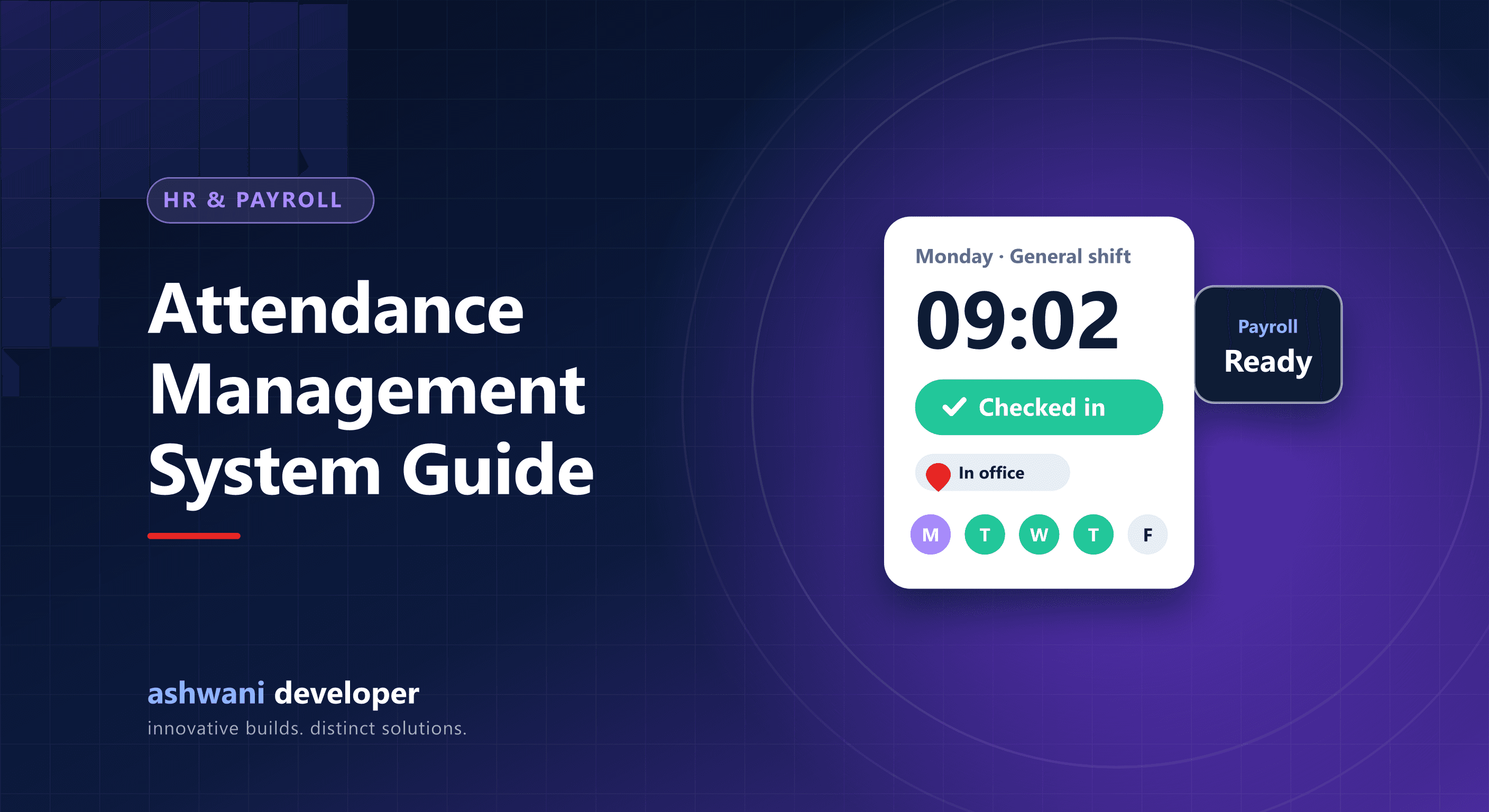
Quick answer: a modern attendance management system lets employees check in from an approved phone or device, verifies location or network where needed, applies shift and late rules automatically, manages leave and overtime, and feeds accurate data straight into payroll, replacing registers and manual spreadsheets.
Attendance sounds simple until you manage multiple shifts, field staff, branches, late rules, leave balances, and month-end payroll. Errors cost money and trust. A well-designed system removes most of the manual work.
Check-in methods compared
| Method | Strengths | Limitations |
|---|---|---|
| Paper register | No setup | Easy to manipulate, manual payroll |
| Biometric device | Strong identity check | Hardware cost, single location, maintenance |
| Mobile app with geofence | Works for office and field staff, no hardware | Needs device and location controls |
| Office network or QR code | Simple, location-bound | Not suitable for field staff |
Features that matter
Mobile check-in with safeguards
- Device approval: each employee checks in only from an approved phone, which blocks buddy punching.
- Geofencing: check-in allowed only within a set radius of the workplace or client site.
- Server-side time: the server records the time, not the phone, so changing the phone clock does nothing.
- Optional selfie for higher-risk roles.
Shifts and rules
Multiple shifts, grace periods, late marks, half days, and weekly offs applied automatically.
Leave management
Leave types, balances, approval workflows, and holiday calendars by branch.
Overtime and field work
Track overtime hours and on-duty visits with locations for field teams.
Payroll integration
Attendance, leave, and overtime flow straight into salary calculation, with exports for accounting.
Dashboards
Who is present today, late arrivals, pending approvals, and trends over weeks, visible to managers on web and mobile.
A real example
Presentee is a production attendance and payroll platform built with a Next.js web dashboard and a native Expo mobile app. It uses device approvals, server-authoritative check-in, and grace-period late rules, the same safeguards described above.
Privacy and fairness
Location and device data are personal information. Collect location only at check-in rather than tracking employees continuously, explain clearly what is recorded and why, restrict who can view it, and follow India's data protection requirements.
Rollout steps
- Define shifts, late rules, leave policies, and holidays.
- Set up branches and geofences.
- Import employees and approve devices.
- Run in parallel with the old method for one cycle.
- Connect payroll once numbers match.
Off-the-shelf or custom?
Standard HR apps suit many businesses. Custom systems make sense when you have unusual shift patterns, field operations, client-site work, or need tight integration with your CRM or ERP; see ERP vs CRM.
Need attendance and payroll that fit your operation? See CRM and ERP development or describe your team structure.