ERP vs CRM: Key Differences and Which Your Business Needs First
ERP vs CRM explained: what each system does, how they differ, how they work together, and how to decide which one your business should implement first.
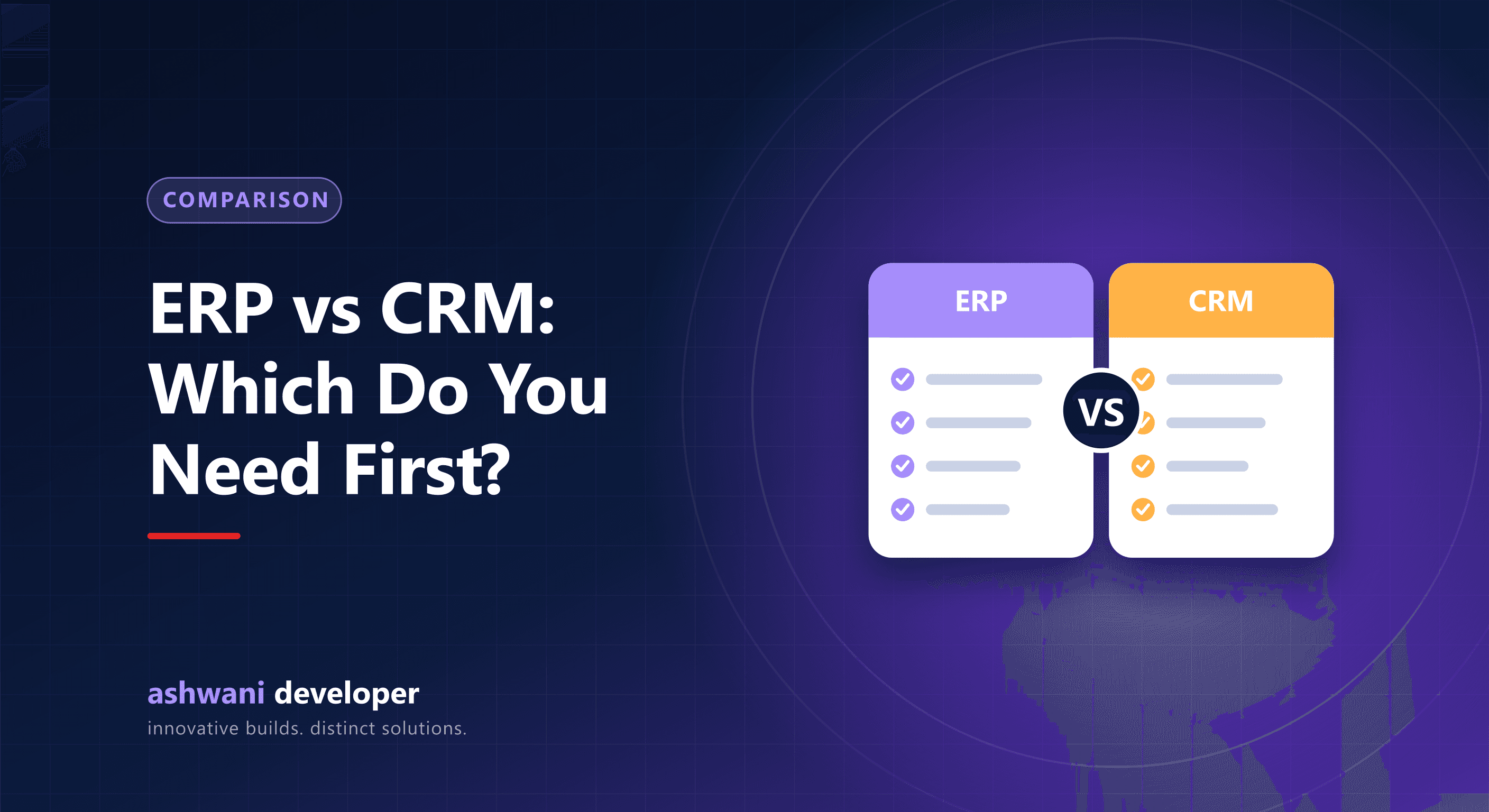
Quick answer: a CRM manages customer-facing work: leads, sales, customer communication, and support. An ERP manages internal operations: inventory, purchasing, production, finance, and HR. CRM helps you win and keep customers; ERP helps you deliver efficiently. Most growing businesses need a CRM first and an ERP as operations become complex.
What a CRM does
- Captures and tracks leads.
- Manages the sales pipeline and quotes.
- Records every customer interaction.
- Supports customer service and renewals.
- Reports on sales performance and marketing sources.
What an ERP does
- Inventory and warehouse management.
- Purchasing and supplier management.
- Production planning and manufacturing.
- Accounting, invoicing, and tax.
- HR, payroll, and attendance.
Side-by-side
| CRM | ERP | |
|---|---|---|
| Main focus | Customers and revenue | Operations and resources |
| Primary users | Sales, marketing, support | Finance, operations, procurement, HR |
| Key question | How do we win and keep customers? | How do we deliver efficiently and profitably? |
| Typical data | Leads, contacts, deals, tickets | Stock, orders, invoices, payroll |
| Implementation | Usually faster | Usually broader and longer |
How they work together
The real value appears when they are connected. A deal won in the CRM creates a sales order in the ERP. The ERP updates stock and invoices. Payment status flows back to the CRM so salespeople see whether a customer has dues before offering more. Without integration, teams retype data and disagree about which numbers are correct. See API integration for business.
Which should you implement first?
- CRM first if your main challenge is lost leads, inconsistent follow-up, or no visibility into sales.
- ERP first if your challenge is stock errors, production delays, or financial reconciliation.
- Both, in phases, if you are scaling a product business with sales and operations both under strain.
Off-the-shelf, customised, or custom-built?
Large ERP suites are powerful but can be expensive and rigid for small and mid-sized businesses. Many Indian SMEs combine accounting software with a tailored CRM and lightweight operations modules built around their workflow. The right choice depends on process complexity and integration needs; see custom CRM vs off-the-shelf SaaS.
Signs you need each
You need a CRM if leads live in WhatsApp chats and spreadsheets, follow-ups are forgotten, or managers cannot see the pipeline.
You need ERP capabilities if stock never matches the system, orders are delayed by manual coordination, or month-end accounting takes days.
Not sure where to start? See CRM and ERP development or describe your biggest operational pain point. Also read what is CRM development.