Pages Every Business Website Needs (and What to Put on Each)
The essential pages for a small business website and what each should contain: home, services, about, portfolio, testimonials, FAQ, blog, contact, and legal pages.
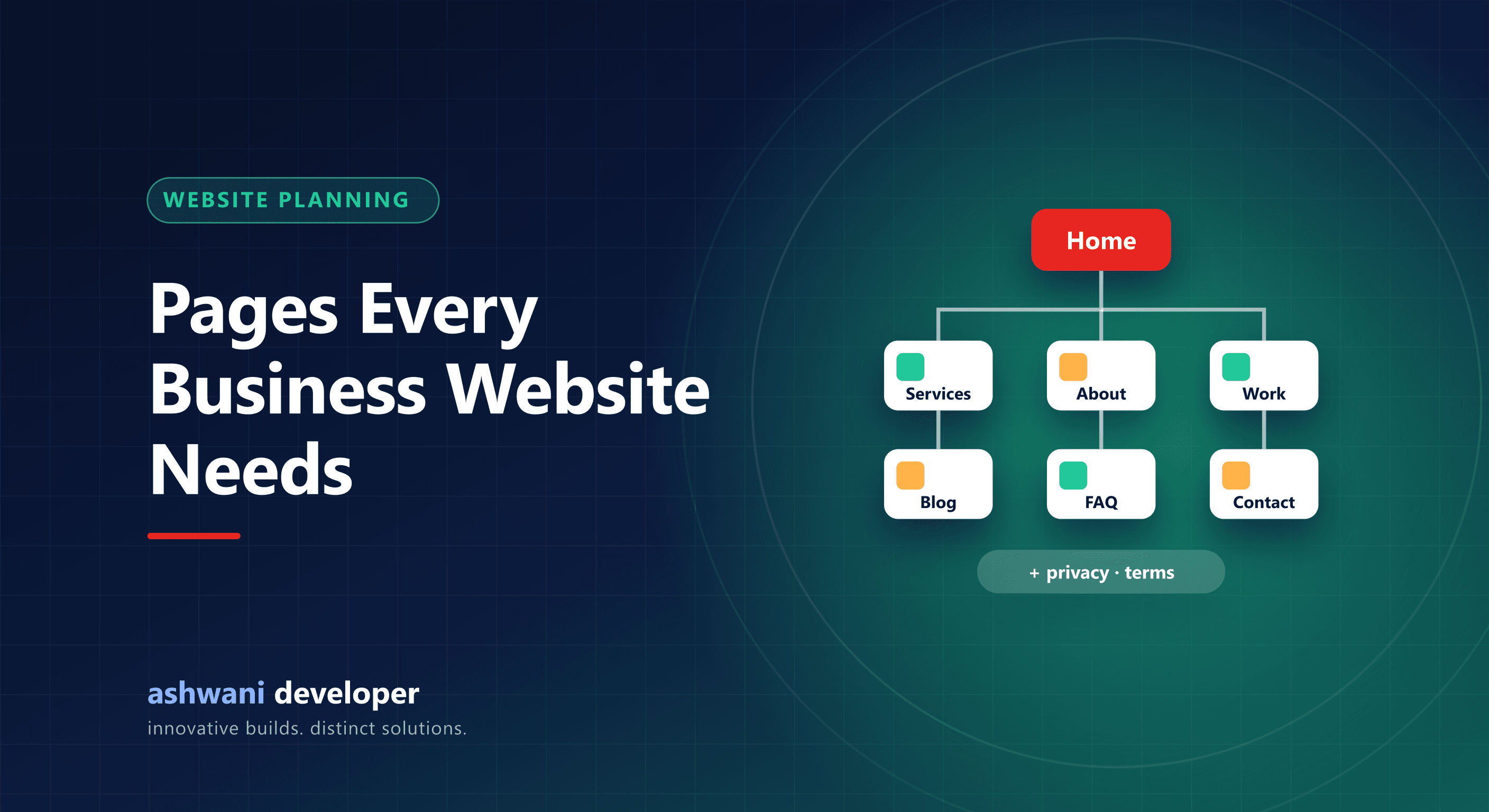
Quick answer: most business websites need a homepage, one page per main service, an about page, proof (portfolio or case studies and reviews), an FAQ, a contact page, and privacy and terms pages. A blog is the main way to keep earning search traffic over time.
1. Homepage
Answer three questions within seconds: what you do, who it is for, and what to do next. Include a clear headline, your main services, proof such as projects or reviews, and a prominent call to action.
2. Service pages (one per service)
Separate pages rank for separate searches and convert better because they speak to one need. Each should explain the problem, your approach, what is included, process, FAQs, and a call to action. This site's website development and CRM development pages follow that pattern.
3. About page
People buy from people. Share who is behind the business, experience, credentials, and why you do the work. Real photos beat stock images.
4. Portfolio or case studies
Show real work with context: the client's situation, what you did, and the outcome. Case studies are often the most persuasive pages on a service business website.
5. Testimonials and reviews
Genuine quotes with names and, where possible, photos or company names. Link to your Google reviews.
6. FAQ
Answer pricing approach, timelines, process, and policies. Good FAQs reduce repetitive calls and pre-qualify leads.
7. Contact page
Phone, WhatsApp, email, a short form, address with map if you have an office, and hours. Make every option one tap on mobile.
8. Blog or resources
Articles answering customer questions bring search traffic that service pages alone cannot. Start with the questions you hear most often.
9. Legal pages
Privacy policy explaining what data your forms collect and why, and terms of service. Online stores also need shipping, returns, and refund policies.
Optional but valuable
- Location pages if you genuinely serve distinct areas with different details.
- Careers if you hire.
- Pricing or a pricing guide, which can attract highly motivated visitors.
Navigation tips
Keep the main menu short, put the call to action in the header, and link related pages within the content. Use a footer for secondary links. See design mistakes that reduce enquiries.
Planning a new site? Read how long a website takes and website cost in India, or share your plan.