Website Maintenance Checklist: What to Do Monthly, Quarterly, and Yearly
A simple website maintenance schedule for business owners: backups, updates, security checks, speed, broken links, and SEO reviews, grouped by how often to do them.
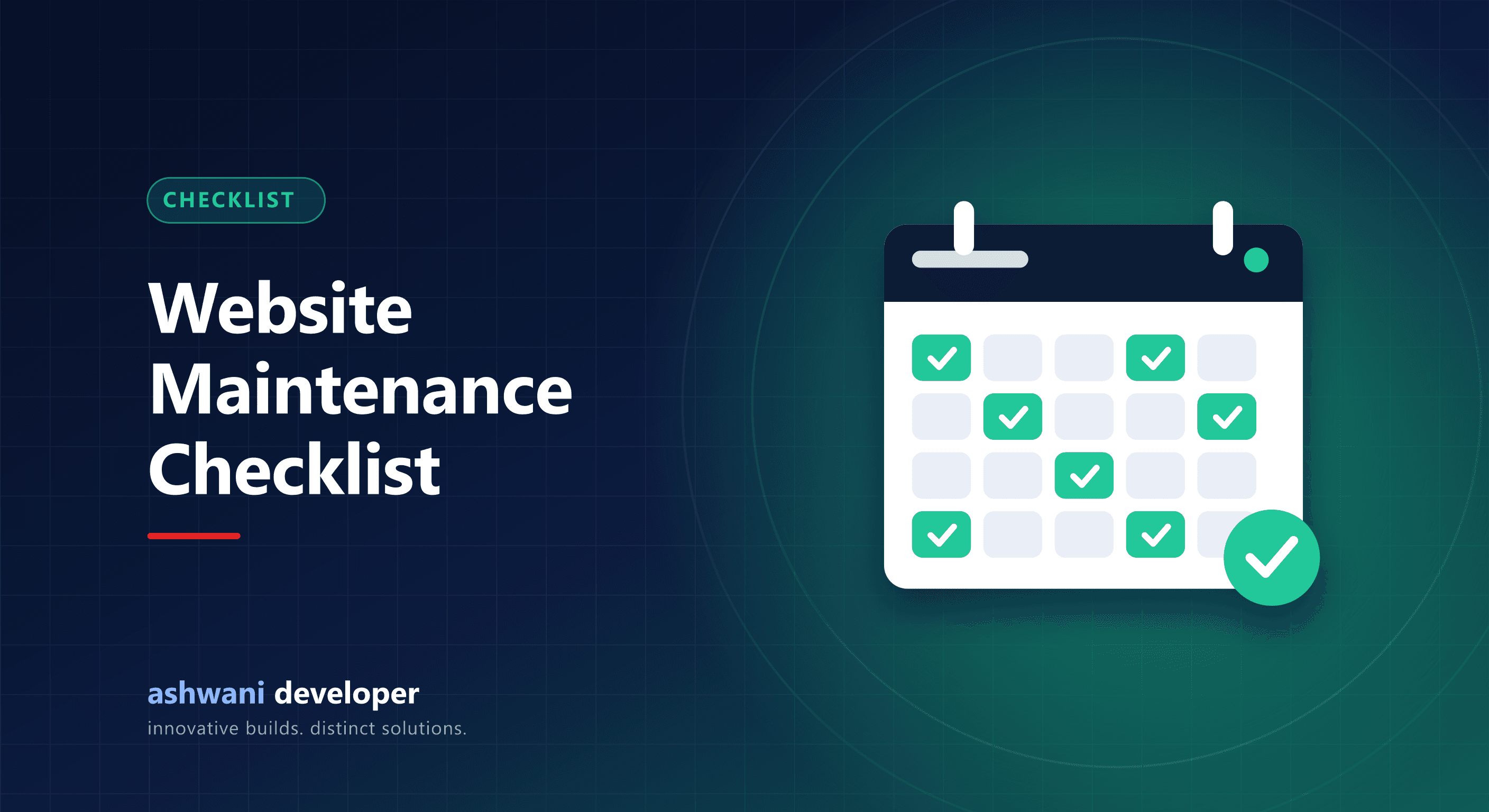
A website is not finished at launch. Software ages, links break, search results shift, and security threats evolve. Ten minutes of regular care costs far less than recovering from a hacked or broken site. This schedule shows what to check and how often.
Every week or two
- Check that the site loads and the main pages work. Uptime monitoring can alert you automatically.
- Test your contact form by sending yourself an enquiry. Forms break silently more often than you would expect.
- Review new enquiries and confirm they are reaching the right person.
Every month
- Verify backups are running and that you can access the latest copy.
- Apply updates to the framework, dependencies, plugins, and server software, ideally testing first.
- Review Search Console for crawl errors, indexing problems, and new queries. Our indexing guide explains the reports.
- Check speed on mobile and investigate any drop.
- Publish or refresh content: one useful post or page update keeps the site active.
Every quarter
- Scan for broken links and fix or redirect them.
- Review user accounts and remove access for people who no longer need it.
- Check the top pages for outdated prices, team members, and contact details.
- Review titles and descriptions for pages with many impressions but few clicks.
- Test a restore from backup on a safe copy.
Every year
- Renew domain and hosting and confirm payment details and contact emails are current.
- Renew or verify the SSL certificate if it is not renewed automatically.
- Audit the whole site for content that should be updated, merged, or removed.
- Review the design against current expectations and your brand.
- Reassess security: passwords, two-step login, and permission settings.
Warning signs to act on immediately
- The site suddenly slows down or shows errors.
- Browsers warn visitors that the site is not secure.
- Unknown pages or admin users appear.
- Enquiries stop arriving.
- Search traffic drops sharply.
DIY or outsource?
The weekly checks are easy for any owner. Updates, security, and backups are better handled by a developer, particularly on custom sites where an untested update can break features. A site built with automated deployments, like the ones described in our guide to launching a website, makes updates safer. If you want ongoing care, ask about a support plan alongside website development.