What Is a Lead Management System? How It Works and Why Sales Teams Need One
A lead management system captures, qualifies, assigns, and tracks every enquiry until it converts. Learn how it works, core features, lead scoring, and how to set one up.
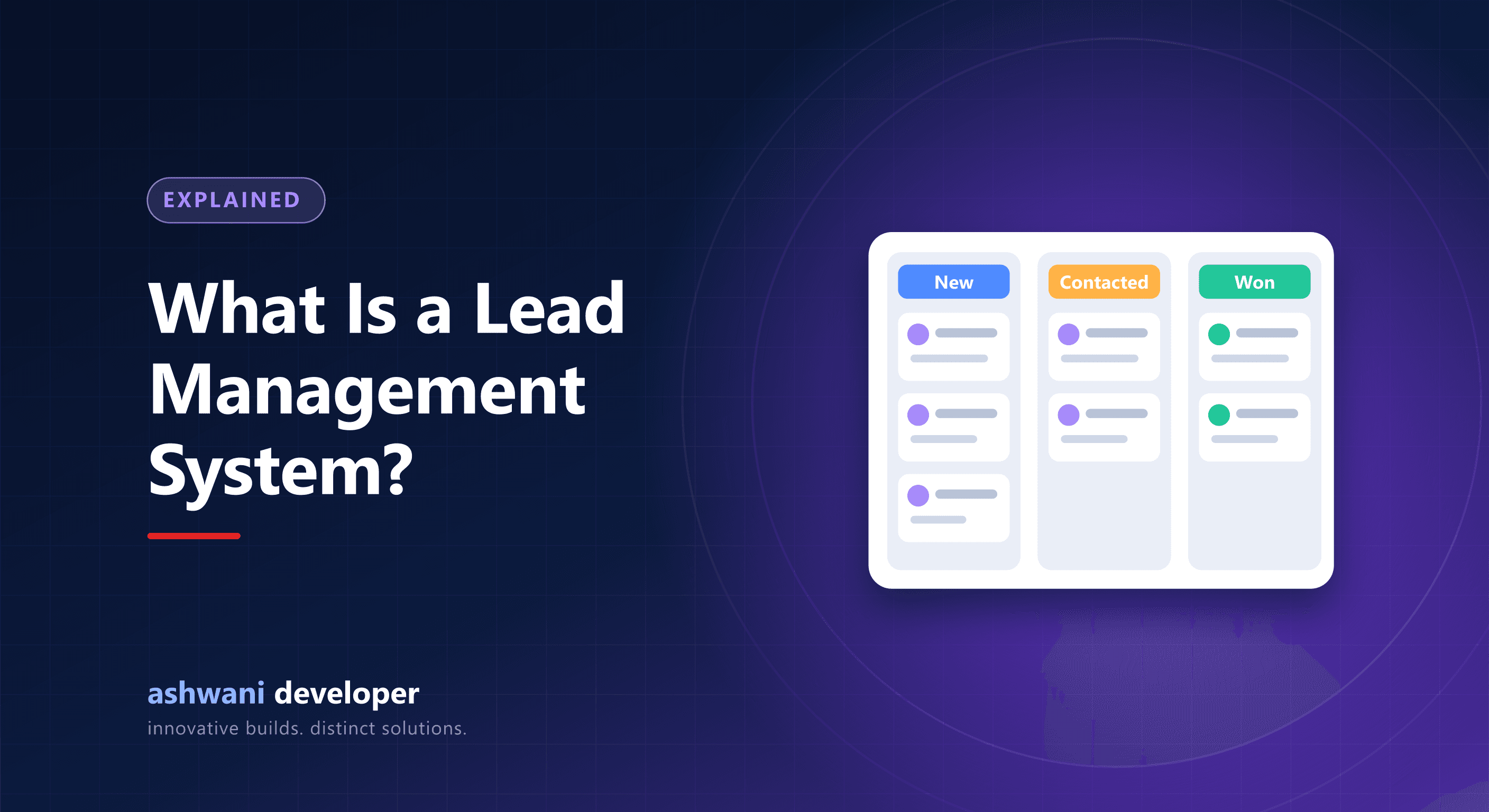
Quick answer: a lead management system is software that collects enquiries from all your marketing channels, qualifies and assigns them, reminds your team to follow up, and tracks each lead until it becomes a customer or is closed. It turns scattered enquiries into a measurable sales process.
The lead management process
- Capture: leads arrive from forms, ads, calls, chat, email, and events.
- Deduplicate and enrich: merge repeat enquiries and add details such as source and interest.
- Qualify: decide whether the lead fits your offer and how urgent it is.
- Assign: route to the right person automatically.
- Nurture and follow up: scheduled calls, messages, and content.
- Convert or close: record the outcome and the reason.
- Analyse: learn which sources and actions produce customers.
Core features
- Multi-source capture via website forms, ad platform integrations, WhatsApp, and call tracking.
- Duplicate detection by phone or email.
- Assignment rules: round robin, territory, product, or workload.
- Follow-up tasks and reminders with overdue alerts.
- Pipeline view showing every lead's stage.
- Activity history of calls, messages, and notes.
- Reports: conversion by source, response time, and team performance.
Lead scoring explained
Lead scoring assigns points based on fit and behaviour, so your team calls the most promising leads first.
| Signal | Example | Effect |
|---|---|---|
| Fit | Budget, location, or company size matches | Higher score |
| Intent | Visited pricing page, requested a quote | Higher score |
| Engagement | Replied to messages, attended a demo | Higher score |
| Negative | Wrong location, student or job seeker | Lower score |
Start simple, with a few clear rules, and refine them as you learn which leads convert.
Lead management system vs CRM
Lead management focuses on the journey before a sale. A CRM covers the full customer relationship, including after the sale: accounts, support, renewals, and repeat business. Many businesses start with lead management and grow it into a full CRM. See what is CRM development.
Why speed of response matters
Leads go cold quickly, and prospects often contact several businesses at once. Instant acknowledgement plus a fast human follow-up consistently outperforms a slow but detailed response. Automation helps; see AI automation for small business.
How to set one up
- List every source where leads arrive today.
- Define your stages and what moves a lead between them.
- Agree on assignment rules and response time targets.
- Connect sources so no manual copying is needed.
- Import existing leads from spreadsheets.
- Train the team and review reports weekly.
Industry examples
Want a lead system that fits your sales process? See CRM development or list your lead sources for a setup plan.